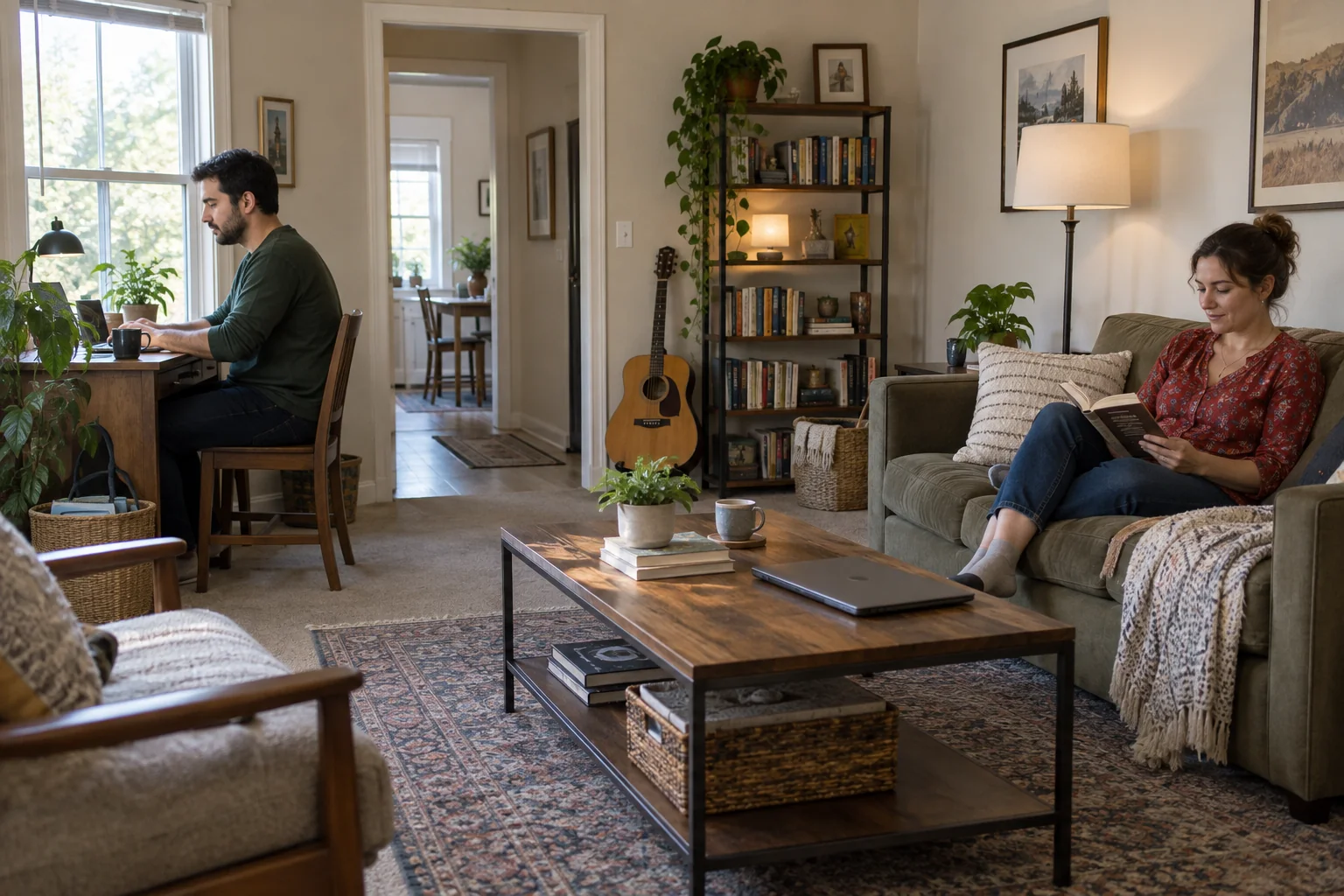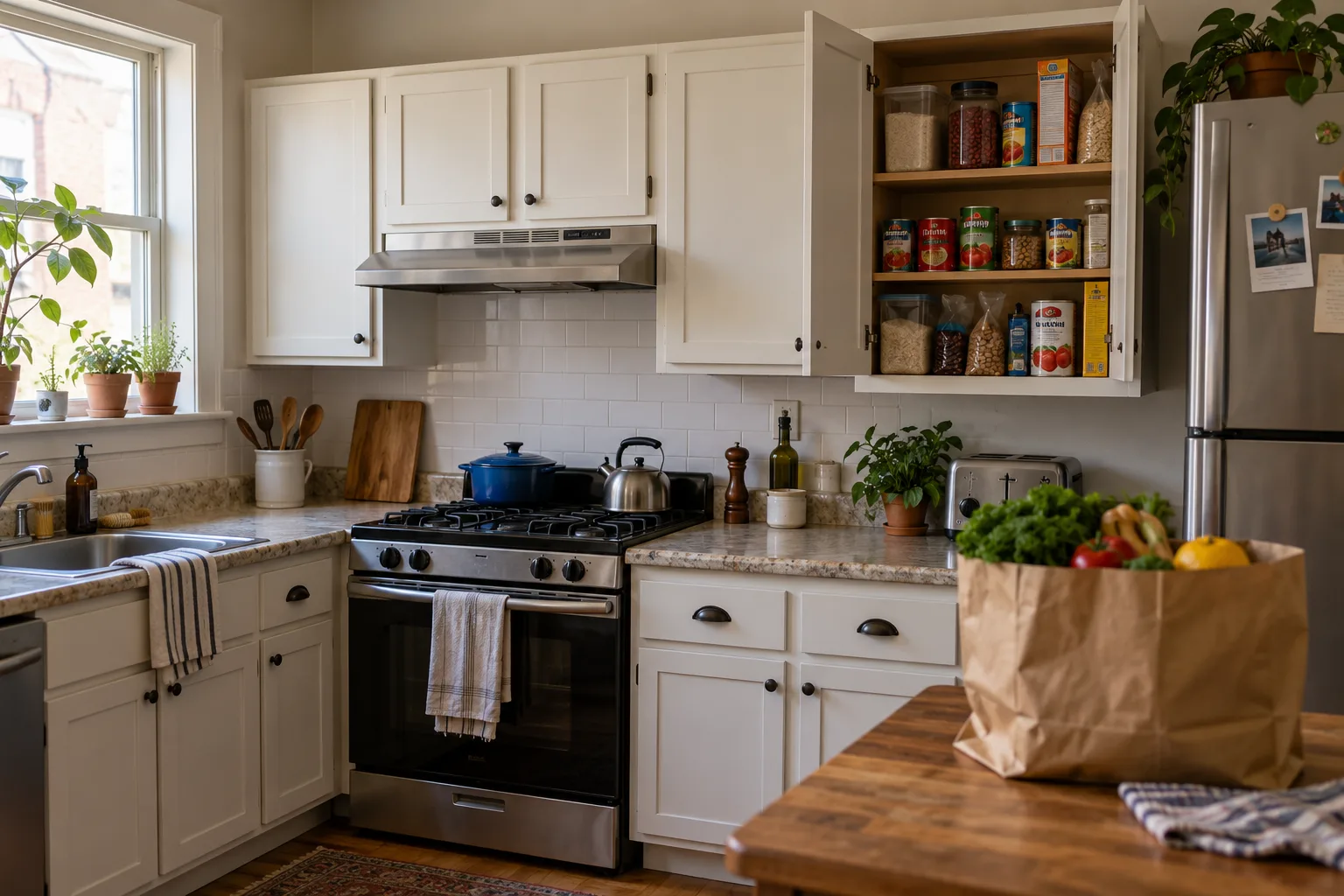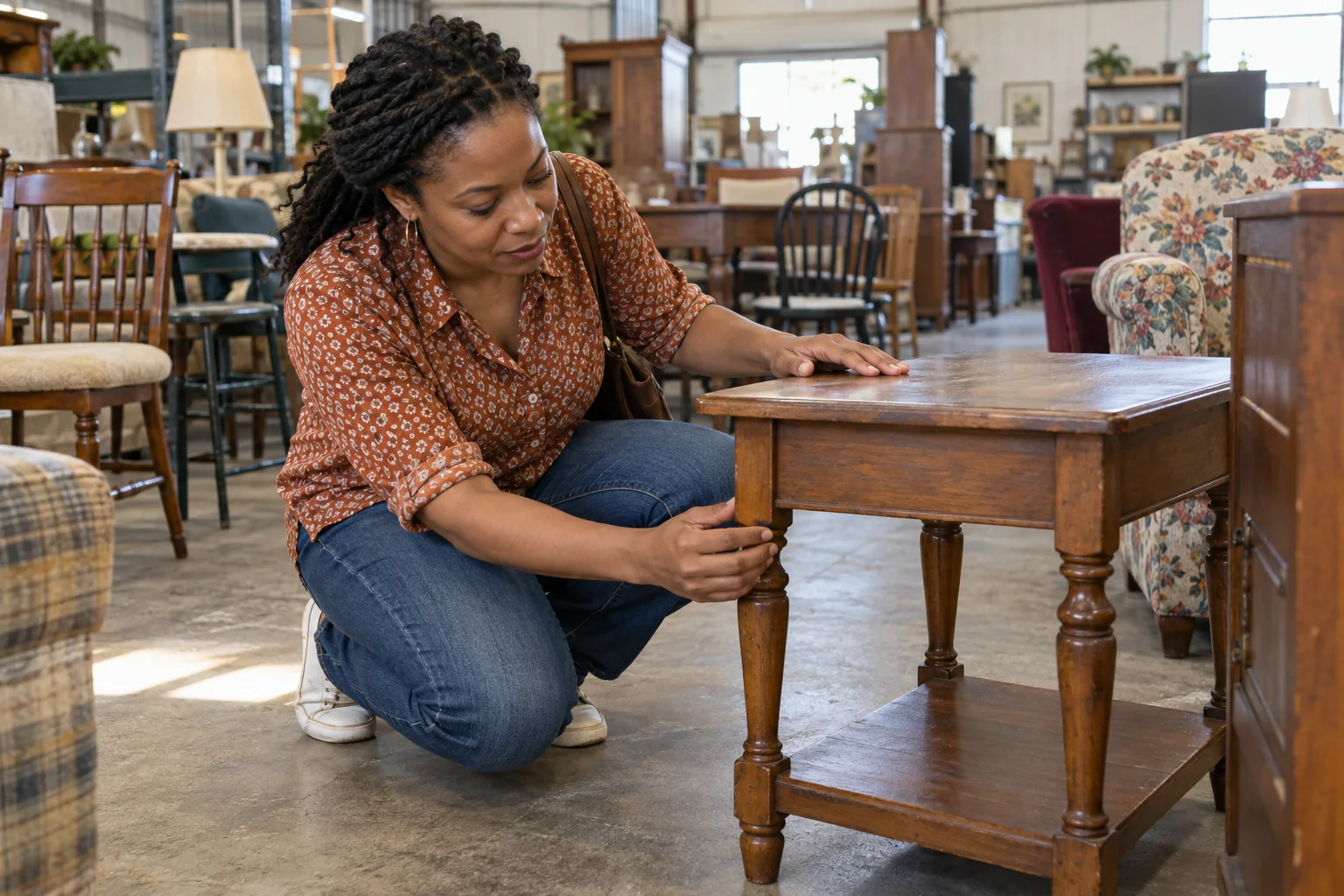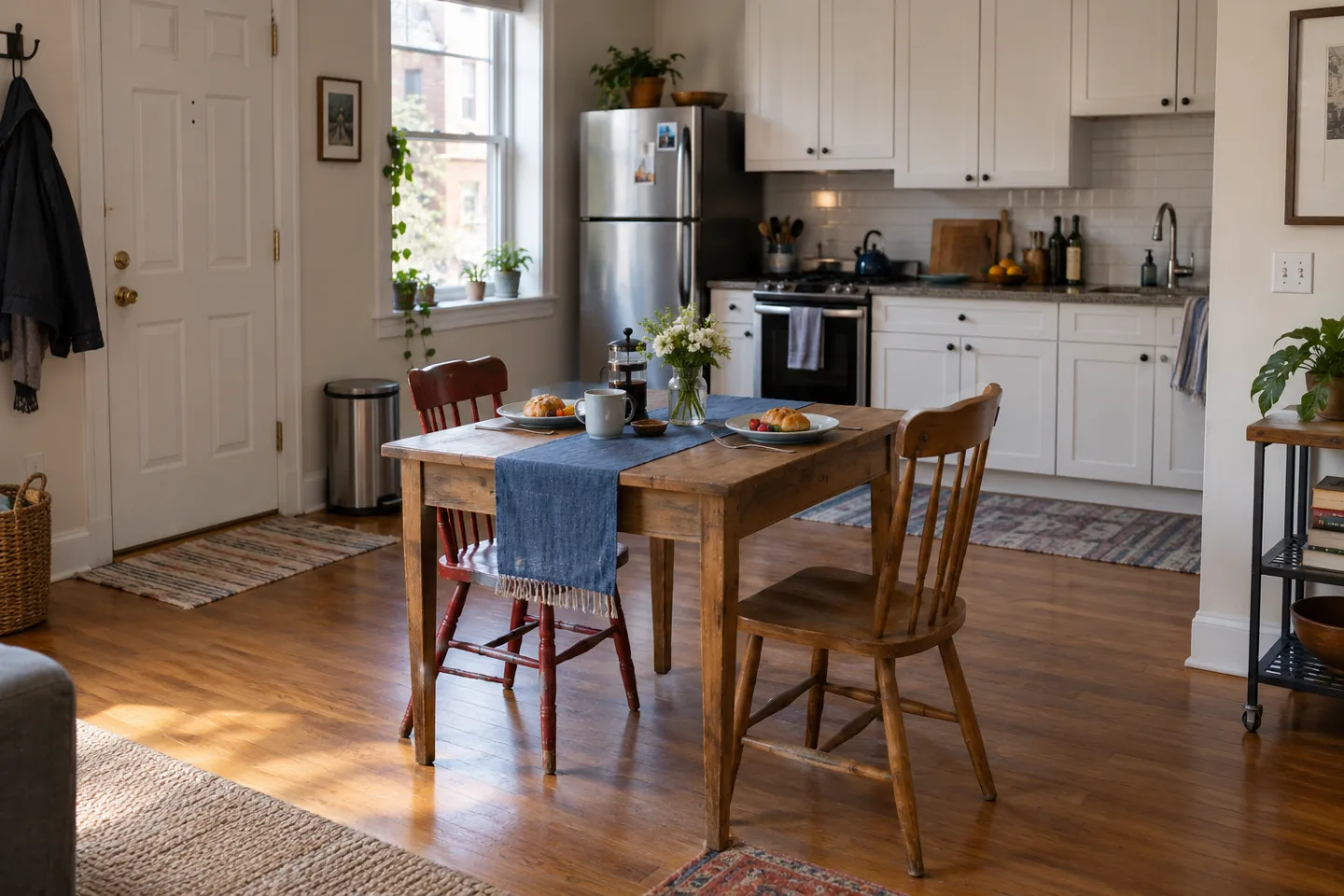
A table can fit between the kitchen and the couch while making both harder to use. Slide a chair back and the route to the refrigerator disappears. Sit at the other end and someone's knees meet a table leg. The dimensions were correct. They described the furniture, not the meal.
Choosing a dining table for a small apartment starts with the people who use it every day. A place for two breakfasts is different from a table where someone works all afternoon. Occasional dinner guests matter too, but their chairs do not necessarily need to occupy the room the other six nights. Before looking for a smaller table, decide which version of the room you are trying to make comfortable.
Draw the routes that stay open
On a simple floor plan, mark the doors, kitchen cabinets, refrigerator, and any nearby seating. Then add the movements those objects require: a cabinet drawer sliding out, a refrigerator door swinging open, someone getting off the couch. A strip of empty floor may already have several jobs. Placing a table there does not remove those jobs; it makes them compete.
Now place the chairs as if someone were sitting in them, rather than pushed neatly under the table. The relevant question is whether another person can carry a plate through the remaining space without asking them to move. There is no single clearance that captures every household's needs. Your chairs, body sizes, mobility requirements, and the way you carry things all affect the answer. A route that technically exists can still be uncomfortable to use.
Keep the most frequent trip in mind. If dinner comes straight from the kitchen, the path between the stove area and the table matters more than an unused corner behind a plant. If the table is next to the apartment entrance, arriving with groceries should not require rearranging it. An attractive layout that repeatedly interrupts ordinary movements is unfinished, even when the room looks spacious in a photo.
Choose a shape for the location
A round tabletop removes corners from a walking route and lets people approach from several angles. Against a straight wall, however, its curve can leave space behind it that a rectangular table would use. A narrow rectangle may work well along that wall, especially if two people sit side by side. It becomes a different proposition when you expect someone to sit on every side.
Consider an illustrative comparison, not a recommended size: a rectangular top measuring 36 by 24 inches and a round top 36 inches across. The rectangle occupies a 36-by-24-inch outline; the circle needs a 36-by-36-inch envelope. That does not make the rectangle the better table. The round one might make an awkward turn easier, while the rectangle might tuck beside a wall. The useful comparison is the occupied layout, not the labels compact or space-saving.
Look underneath as well. A pedestal may let chairs move around the table more freely, but its base can occupy foot space. Four legs can interfere with the seating positions you want. An apron below the top may stop an armchair from sliding underneath. An extension leaf does not necessarily create more room between the legs. Try the intended seats, including the end seat, rather than judging the table only from above.
A bench trades one kind of space for another
A bench along a wall can keep chair backs out of a passage. It can also make getting up more complicated. If the bench is accessible only from one end, the person sitting farther in may need someone else to move first. That arrangement can be fine for a relaxed meal and frustrating for a person who uses the table as a workspace with frequent breaks.
Storage underneath is useful only if you can reach it. Check whether the lid opens with the table in place and whether the items inside are things you need every day. A bench that requires moving a heavy table before retrieving school supplies has moved the clutter into a more elaborate obstacle. Likewise, a stool that fits perfectly underneath might not be the seat you want for a long dinner.
The chair is part of the table purchase even if you already own it. Measure its full depth, including the angle of the back, and test how far it travels when you sit down. Matching furniture sets are not required. A familiar comfortable chair paired with a suitable table can be a more useful choice than buying a coordinated set whose seats consume the room.
What a folding table leaves behind
A drop-leaf table can offer a small everyday surface and a larger one when needed. Check the footprint with the leaves both down and up, including the supports. Some designs require shifting a leg into the same space where a guest's feet would go. Others need to be pulled away from the wall before opening. The changeover should be manageable for whoever will use the table, not only for the strongest person in the household.
Extra chairs also need a home. If they live in a hallway and block access to a closet, the room has not gained as much space as the folded table suggests. Think through the complete sequence: move the table, open the leaves, retrieve the chairs, set the meal, and return everything afterward. A little setup for occasional guests is reasonable. Doing it twice a day may become a reason to stop using the dining area.
For wall-mounted furniture, follow the specific manufacturer's mounting instructions and check whether your wall and rental arrangements allow the installation. A tabletop's size alone does not tell you what fastening it requires. If the wall construction or mounting method is uncertain, get qualified help rather than improvising. A freestanding table may be the less complicated option, even if it cannot fold completely flat.
Give the layout a real dinner
Before buying, use an existing stable surface of similar size or another safe temporary arrangement to test the layout. A floor outline made with a removable material can help with the footprint, but it cannot show knees, table height, or chair movement. Put the actual chairs in place. Sit down together and have someone use the kitchen while the seats are occupied.
Set out the objects you normally need. Two dinner plates might fit on a narrow table while a serving bowl leaves nowhere for glasses. In that case, a nearby serving surface could be more practical than a larger top. If the table doubles as a desk, consider where the laptop and papers go before eating. A dining table that must be completely cleared from scratch every night is also an organizational commitment.
Finally, try the room after dark. The table might sit beyond the kitchen light or underneath a pendant that belongs to a different spot. Notice glare and shadows from the actual seats before deciding whether additional lighting is needed. If every workable arrangement still blocks the kitchen, an adjacent living area may provide the better dining place. The smallest table is not the goal. A usable place to sit, eat, and get up is.