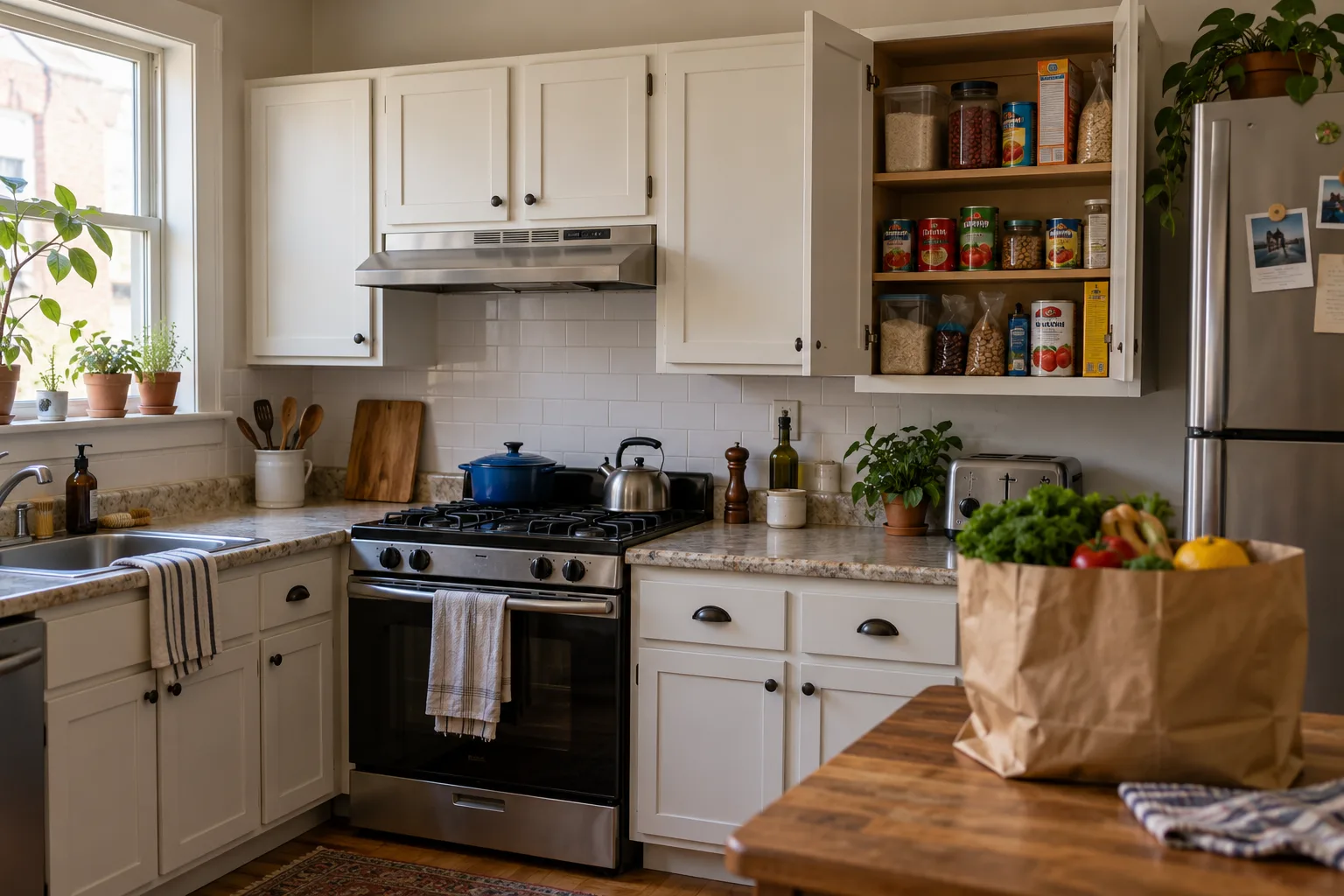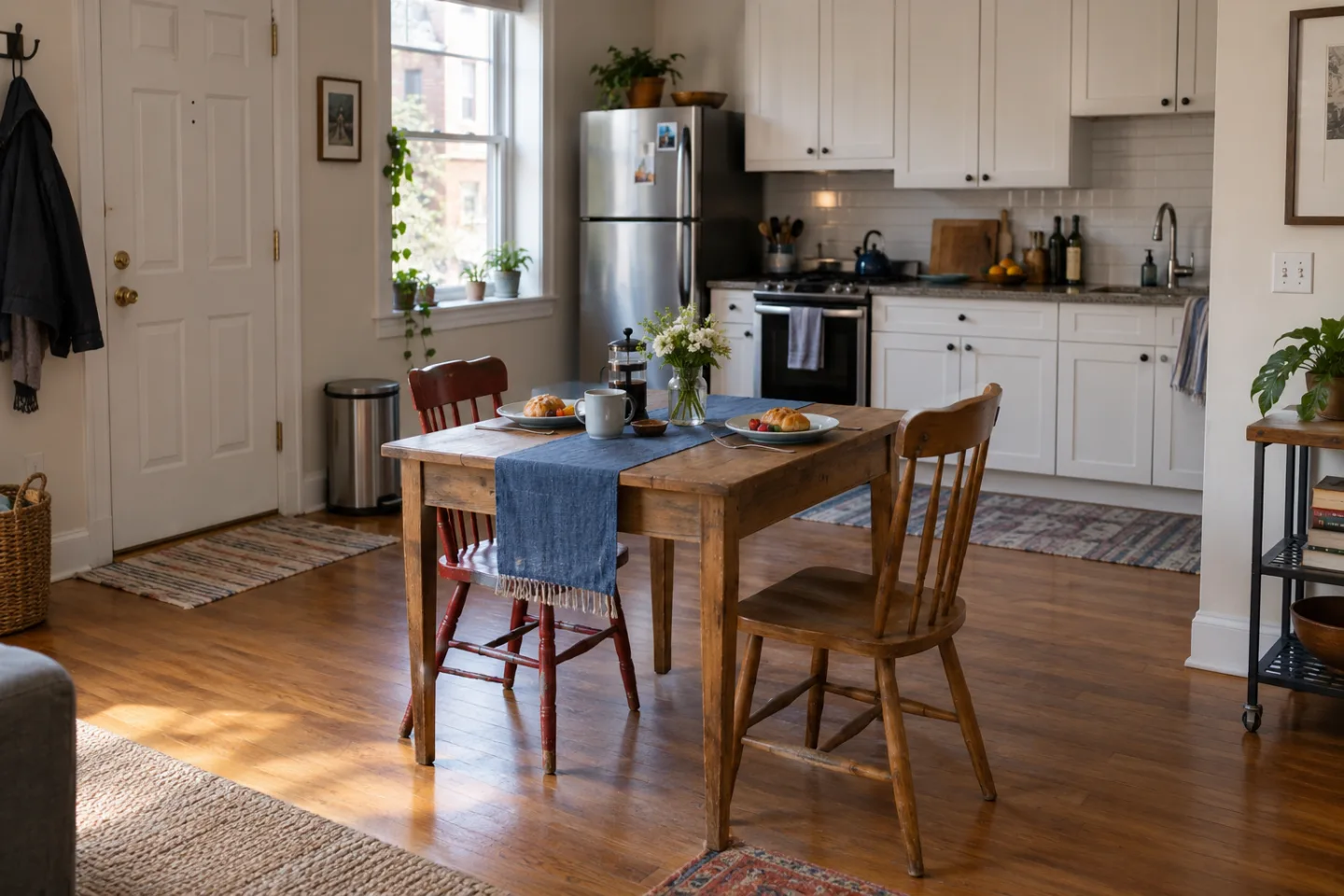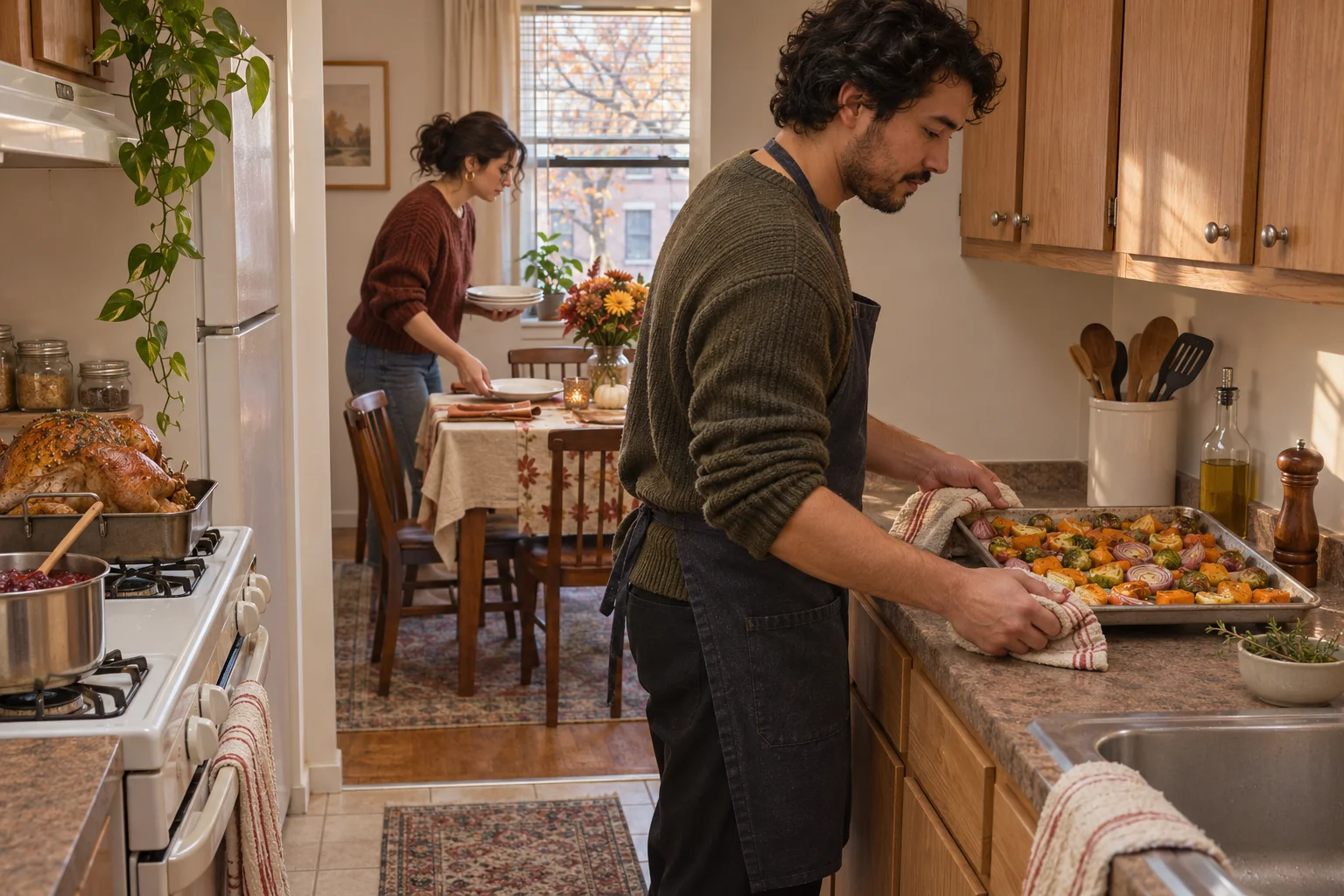
The oven door opens into the only clear spot in the kitchen. There's a bowl of potatoes on the cutting board, and someone has just arrived with a casserole that needs forty minutes at a different temperature. In a small kitchen, Thanksgiving can stall over something as ordinary as where to put a hot pan.
If you're hosting on Thursday, November 26, make the plan before you shop. The size of your oven matters, but so does the space in front of it and the room you have to store everything once dinner is over.
Put the oven schedule on one page
Start with the dish you most want to serve hot. Write down when its pan goes in, which rack it needs, and where it will land when it comes out. Then look at the sides. If two dishes need different temperatures at the same time, move one to a different part of the meal. A stovetop side or a chilled salad can free up the oven without taking anything away from the table.
Say you're feeding six at four. The main dish gets the oven. You'll make potatoes on one burner, and a guest will bring a salad you can serve straight from the fridge. Bread can go in a basket on the table. Now the last half hour has only a few steps, and someone else can put out plates while you handle the hot pan.
Leave a place to put things down
Before you fill the counter, walk through the moment when the oven opens. Can you set a hot pan down without reaching over anything? Is the trivet already there? Can someone get to the plates while you're standing at the stove? That little rehearsal tells you which things can move out of the kitchen for the afternoon.
Put drinks and glasses on a table away from the cooking area if you have room. Give anyone who wants to help a specific job there: fill water glasses, put out serving spoons, or get the table ready. In a narrow kitchen, it's easier to help when you have a place to stand.
Tell guests what “bring a side” means
A dish that arrives ready to go on the table is a different favor from a dish that needs oven time, a serving plate, and space in the fridge. Say what you can accommodate when you invite someone to bring food. “Could you bring rolls and a basket?” is more useful than “Anything is fine.” For dishes that need to stay cold, leave enough space to refrigerate them promptly.
Clear refrigerator space before the grocery trip. Use up the food you meant to eat this week and move shelf-stable items to the pantry if their labels allow it. Set out a few clean, shallow containers before guests arrive. In its November Thanksgiving guidance, USDA advises refrigerating perishable leftovers within two hours. Federal food safety guidance recommends shallow containers so leftovers cool faster. You can put the food away and go back to the table while people are still talking.
Keep one dish you really want to make
It might be your dad's stuffing or the sweet potatoes everyone asks for. Give that dish the space and time it needs, then choose the rest of the menu around it. If you can point to an open spot for the hot pan and a shelf for the leftovers, you've solved two of the problems most likely to interrupt dinner.