A bulk grocery purchase can solve a shopping problem and create a kitchen problem at the same time. The rice fits the budget. The bag does not fit the cabinet. Before adding a pantry cart to a small American apartment kitchen, decide how much food needs to live there between shopping trips and how you will reach it while cooking.
The useful pantry is not necessarily a separate room or a row of matching jars. It is the place where ingredients wait without taking over the counter. In a rental with one narrow cabinet, a modest reserve of familiar foods can work better than a warehouse-club haul that has to be distributed across the apartment.
Follow dinner through the room
Begin with a meal you actually make. Where do you put the grocery bag, find the ingredients, open packages, and set down the pot? If retrieving pasta means moving the toaster, the storage arrangement is interrupting the task it is supposed to support. Fix that movement before deciding whether the kitchen needs more furniture.
Divide the available space by how you use it. Everyday ingredients need an easy reach from the preparation area. Unopened replacements can sit farther away. Occasional baking supplies can occupy a less convenient shelf if baking is genuinely occasional. These are working categories, not rules about which food belongs in which attractive container.
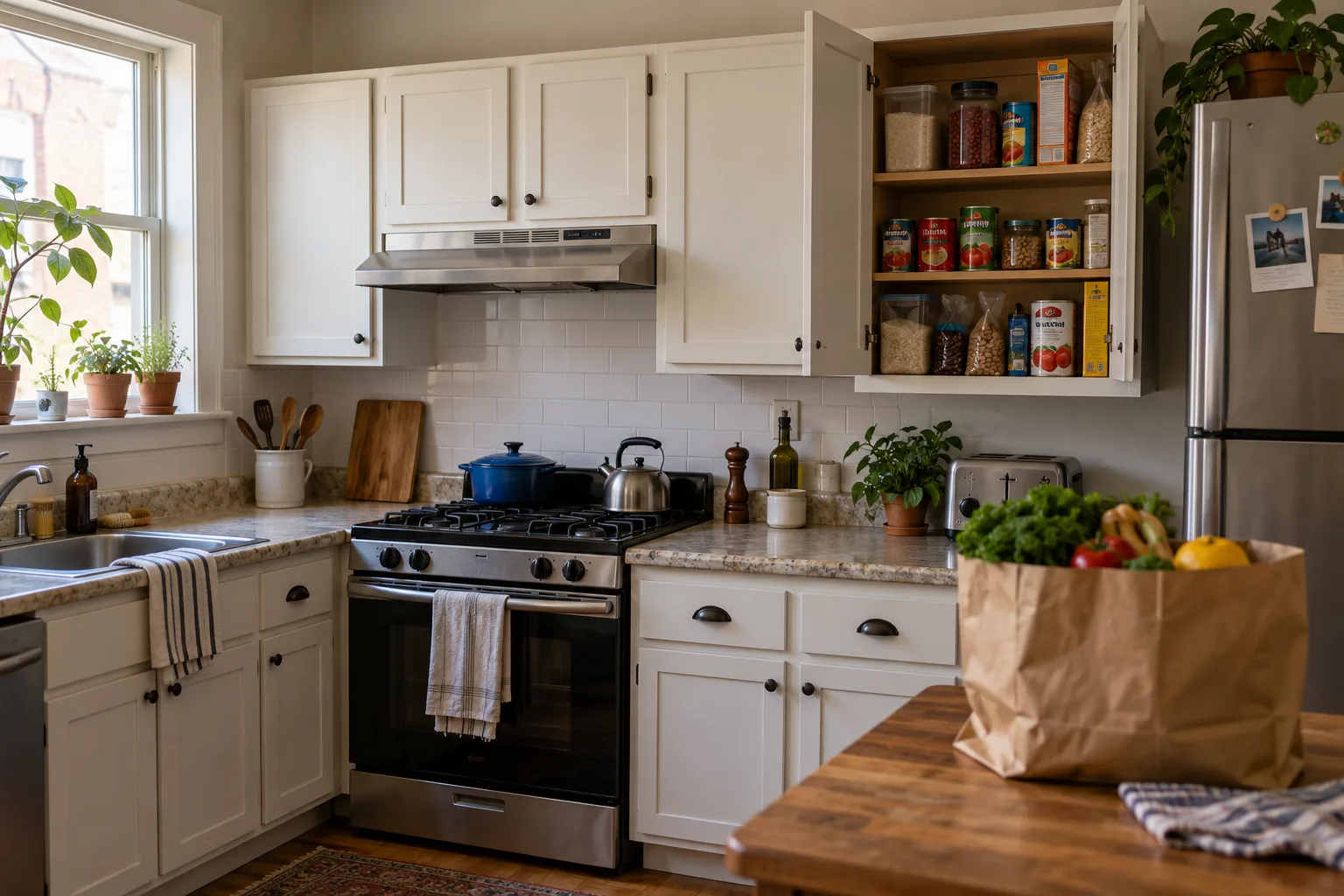
In an illustrative apartment, the only food cabinet has three shelves. Keeping all canned goods together puts frequently used beans behind rarely used pie filling. Moving the dinner ingredients to the middle shelf makes more sense than maintaining a perfect product classification. A kitchen needs to support Tuesday evening as well as a photograph.
Before moving anything, check whether the cabinet also holds dishes because there is nowhere else for them to go. Shifting food into every spare space can leave the plates stranded. A useful plan allocates room to both parts of the meal and keeps the counter available for preparing it.
Shop for the space between trips
A large package is only useful if the household will use it and has a suitable place to store it. Compare the package with the meals you expect to cook before the next shopping opportunity. Buying four varieties of the same ingredient can use more room than keeping a modest supply of the one everybody eats.
The distance to groceries matters in a U.S. setting. A household that drives to a large store twice a month may need a different reserve from someone walking to a neighborhood market. But a less frequent trip does not require buying the largest available version of everything. Separate products that justify a reserve from those that are easy to replace along an existing route.
Leave a little room for the next delivery or shopping bag. A cabinet packed to its last inch only works until somebody buys breakfast cereal. The empty space is part of the arrangement, particularly when two people shop independently or grocery substitutions arrive in different package sizes.
Use the package before replacing it
Original packaging tells you what the food is, how to prepare it, and how it should be stored. Decanting can help with a badly shaped bag, but it creates another job: maintaining the label, relevant dates, and instructions. Matching containers are optional. Being able to identify what is inside is not.
If you do transfer an ingredient, use a suitable clean food-storage container and retain the information you need. Do not assume that a container with a wooden lid is airtight or that a decorative jar is intended for food. Buying a complete set before measuring the shelf can leave more unused containers than unused ingredients.
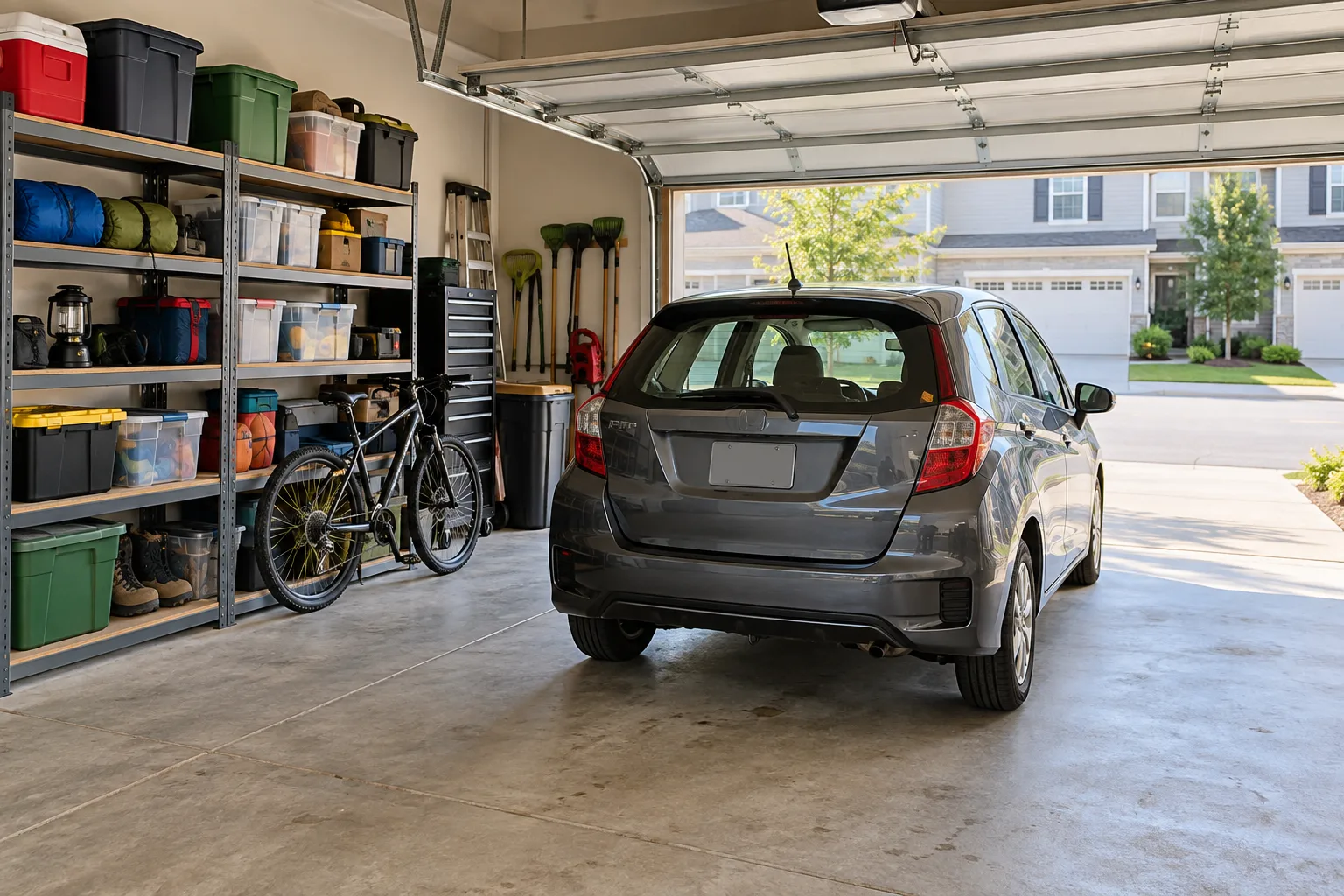
For unopened cans and other shelf-stable products, the USDA’s shelf-stable food guidance explains appropriate storage and the importance of following labels. A cool, dry indoor location is a more sensible pantry choice than an overheated garage. Products marked for refrigeration belong where the label requires, regardless of how similar their packaging looks to shelf-stable versions.
Food storage should also stay separate from household chemicals. A cleaning-supply cabinet is not spare pantry space merely because it has an empty shelf. The room needs a safe division of uses before it needs a more ingenious arrangement of baskets.
Make depth visible
Deep shelves can hide half the stock. Try placing a short row of everyday items at the front and unopened replacements directly behind their matching product. When you use the front package, the next one becomes visible. This gives you a simple rotation without introducing a separate inventory system.
A shallow tray can help if it can be pulled out without tipping or catching on the cabinet door. Measure the inside opening, including hinges, rather than only the shelf width. Leave enough clearance to grasp the tray when it is full. A snug fit is less impressive when it requires two hands and a cleared counter.
Shelf risers are useful for some cans or short jars, but test access to the back row. If the upper shelf blocks your hand, a riser may create two inaccessible layers. Lightweight packages might suit a small open basket; heavy cans need stable support. Organizers should simplify the movement of food, not merely increase the number of levels.
For high cabinets, keep heavier items lower and avoid storing frequently used ingredients where they require awkward reaching. If a step stool is necessary, it needs its own accessible resting place. A storage solution that depends on fetching equipment from another room will be abandoned when dinner is running late.
Give extras a limit
A freestanding cart can work beside a kitchen, provided it leaves the walkway and cabinet doors usable. Check its footprint with the handles included. Think about turning toward the sink while carrying a pan, opening the refrigerator, and passing another person. The cart’s capacity is irrelevant if it occupies the movement the kitchen needs.
An adjacent dining-room cabinet may be a good place for sealed reserves. It is a poor place for ingredients you retrieve repeatedly during one meal. Keep the distinction clear: reserve storage can be farther away; active cooking supplies should not turn every recipe into a series of trips through the apartment.
Choose a visible limit for overflow, such as one shelf or one suitable bin. When it fills, the next step is to use or reconsider the stock, rather than establish another storage site under the desk. This is especially useful when bulk purchasing has become a habit independent of what the household actually eats.
After two ordinary shopping cycles, check what still gets moved out of the way. The answer may be a different package size, fewer duplicates, or a better shelf allocation. If the food is easy to find, the doors open, and the counter is free when you need it, the pantry is doing its job. It does not need a room of its own.