The window looks wide enough. That is a start, but it does not tell you whether an air conditioner belongs there. The sash has to close around the unit, the installation needs the right support, and the outlet needs to suit the equipment. Meanwhile, the room you most want to cool might be on the other side of the apartment. Buying the largest box you can afford solves none of those problems by itself.
In a rental with no central air, begin with the room and the installation rather than the sale price. Your goal might be a comfortable bedroom overnight, a usable living room in the afternoon, or a place where a household member can spend a hot day. Those are different assignments. A unit chosen for one enclosed room should not quietly become your plan for cooling an entire apartment through a narrow doorway.
Pick the room you need most
Walk through the apartment during the hours that bother you. Note which rooms receive direct sun, where people actually sit, and which doors can close. A west-facing bedroom and a shaded room across the hall may need different attention even if their floor areas are similar. Write down the room's dimensions instead of relying on the apartment's total square footage from the listing.
The Department of Energy recommends matching room air conditioners to the space being cooled. Use the manufacturer's sizing instructions for the particular model, including the conditions those instructions ask you to account for. A higher cooling capacity is not automatically a better choice. If the room has unusual features or the sizing is unclear, ask a qualified installer rather than treating a store shelf label as an assessment of your apartment.
Imagine a hypothetical one-bedroom rental with a sunny living room, a shaded bedroom, and one tenant working evening shifts. Cooling the bedroom during the day may matter more than cooling the living room at dinner. Another household may choose the living room because several people need to use it together. Decide whose time and comfort the purchase is intended to support before arguing about which window looks tidier.
Check the window as an installation site
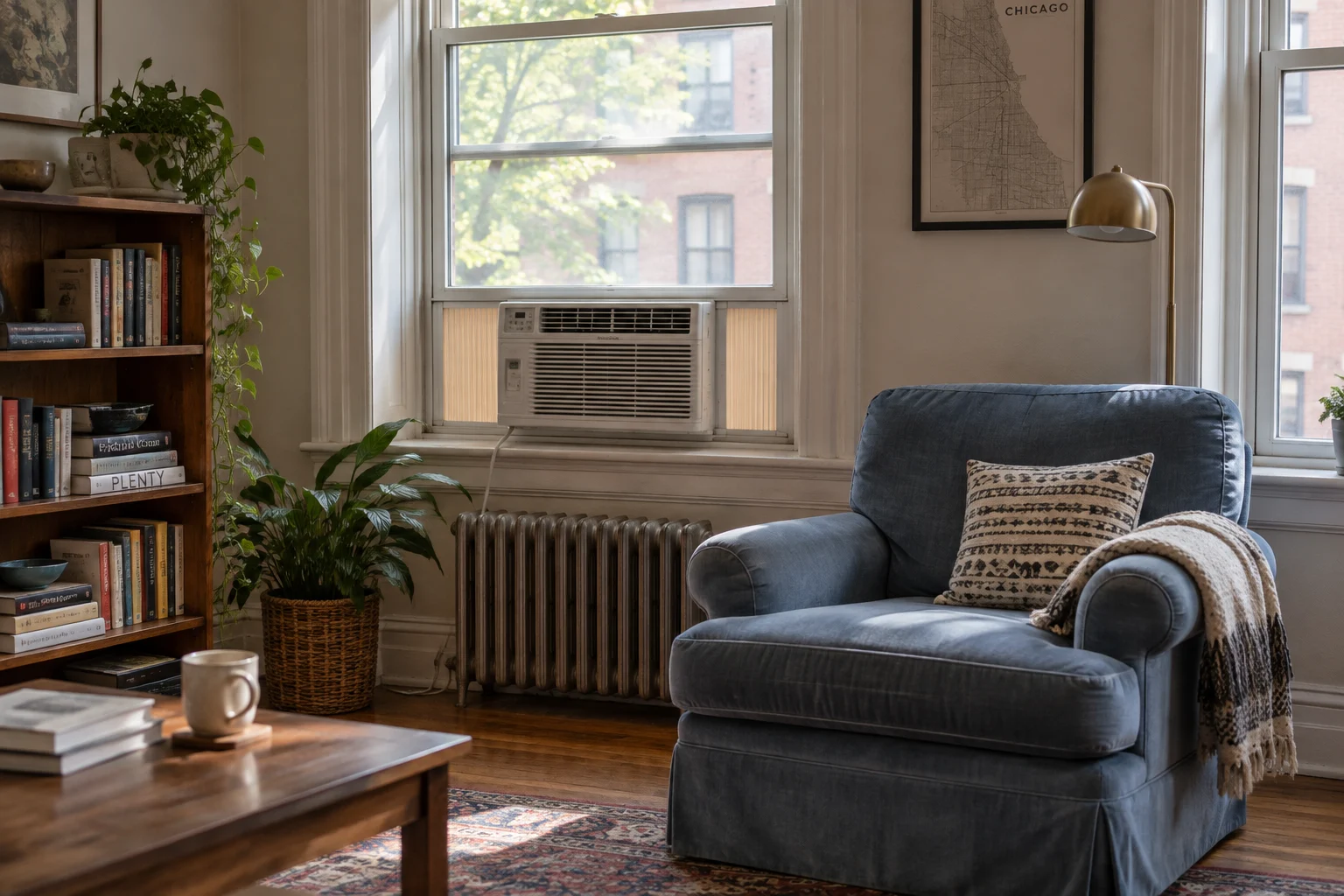
Window type matters as much as width. Identify whether yours opens vertically, slides horizontally, or swings outward, then check whether the equipment is designed for that opening. Measure the usable opening, not just the glass. Screens, storm windows, trim, and the depth of the sill can change what fits. Keep the measurements beside the model's installation requirements so a rough visual match does not become an expensive return.
Ask the landlord or property manager about permission, approved installation methods, and building rules before ordering. Do not infer approval from a neighbor's unit. Another apartment may have different windows or an installation you cannot see. If professional installation is required, include the appointment and cost in the decision. The hardware needed to secure the unit is part of the purchase, not an optional finishing touch.
Keep required exits usable. Do not place a unit in a location where it would obstruct an escape route, and do not improvise supports or electrical connections. Follow the manufacturer's instructions for mounting, drainage, clearances, and power. If the outlet or circuit raises questions, have the landlord or a qualified electrician address them. A power strip is not a substitute for a suitable electrical installation.
Compare what daily use will feel like
Product specifications do not describe the whole experience of living beside the machine. Think about where the bed, desk, and couch sit in relation to it. Can air circulate without blowing directly at someone's face? Can curtains still move safely? Will you need to climb over furniture to reach the controls or filter? A remote control does not solve a maintenance task that requires moving the bed every time.
Noise deserves attention when the room is also a workplace or bedroom. Compare the manufacturer's noise information where available, but remember that an installed unit may interact with the window and room. Check the return policy before purchase, including installation-related restrictions and packaging requirements. You want to know what happens if the unit is technically functional but unsuitable for the room where you need it.
Plan where the displaced items will go. Removing a screen or shifting a curtain rod can leave loose pieces with no obvious home. Keep permitted removable parts together and labeled for the apartment. If seasonal removal is expected, identify a storage location that can safely hold the equipment. A heavy air conditioner cannot spend winter wherever you normally put a folded blanket.
Price the complete arrangement
Compare the unit, required installation materials, labor where needed, and any delivery or removal charges. Then look at operating costs separately. The energy label is a comparison aid based on stated assumptions, not a promise about your utility bill. Your actual use, electricity rate, room conditions, and settings will affect the result. Avoid converting a promotional savings claim into money already available in your budget.
For a hypothetical comparison, one option might cost less upfront but require an installation service that the other includes. Another might fit the bedroom without replacing a window panel or rearranging furniture. Put those differences in separate lines. You are comparing complete installations, so a cheaper appliance with an unresolved mounting problem is not yet the cheaper solution.
If you are considering a portable model instead, read its installation and venting requirements just as carefully. It still needs an appropriate arrangement for the exhaust and any condensate management. Check the actual footprint with its hose in place. The space occupied by a functioning unit can be larger than the rectangle shown in a product photograph.
Make the room easier to cool
Before the hottest part of the day, use existing shades or curtains in ways compatible with the installation and household needs. Move furniture that blocks airflow and keep the equipment's required clearances. Follow the cleaning schedule in the manual, including filter care. A workable setup is one you can maintain without dismantling the room or balancing on an unsuitable chair.
After installation, try the arrangement during the hours you bought it for. Can the person sleeping after a night shift actually rest there? Can someone use the room with the door closed? Is the temperature control accessible? Adjust the layout before buying more equipment. The success of the purchase is a room that works for its occupants, with a secure installation and manageable upkeep, rather than an impressive number on a cardboard box.