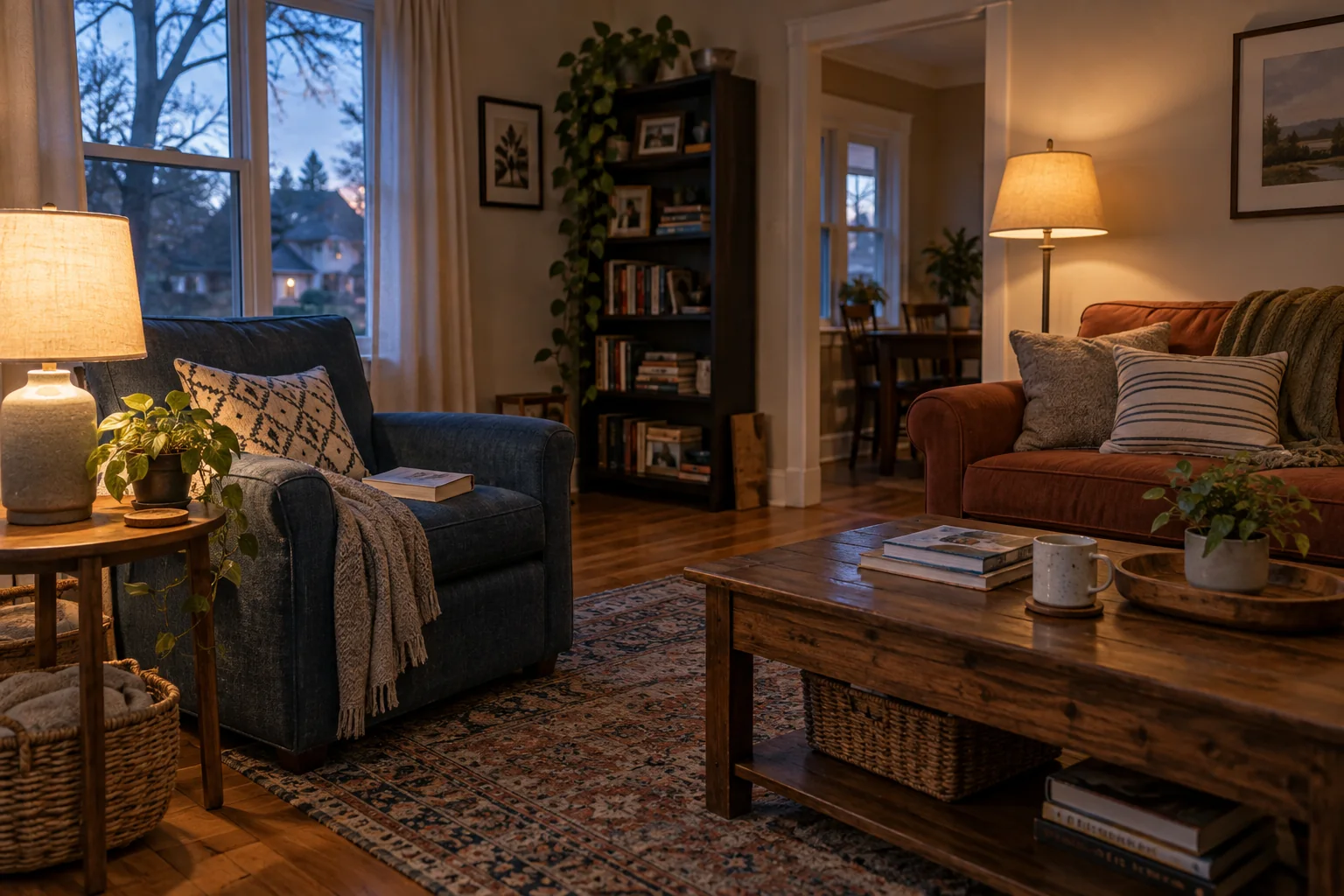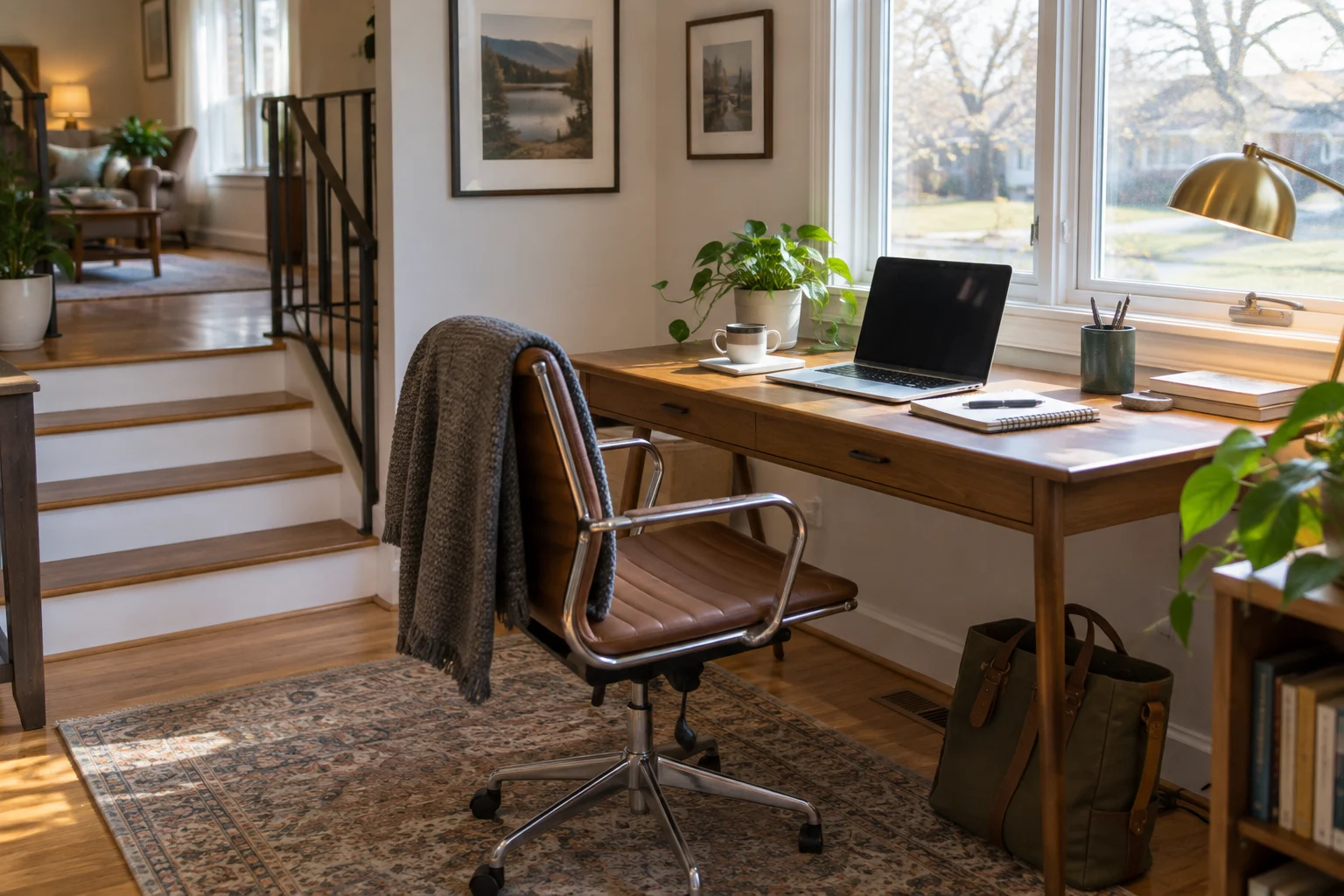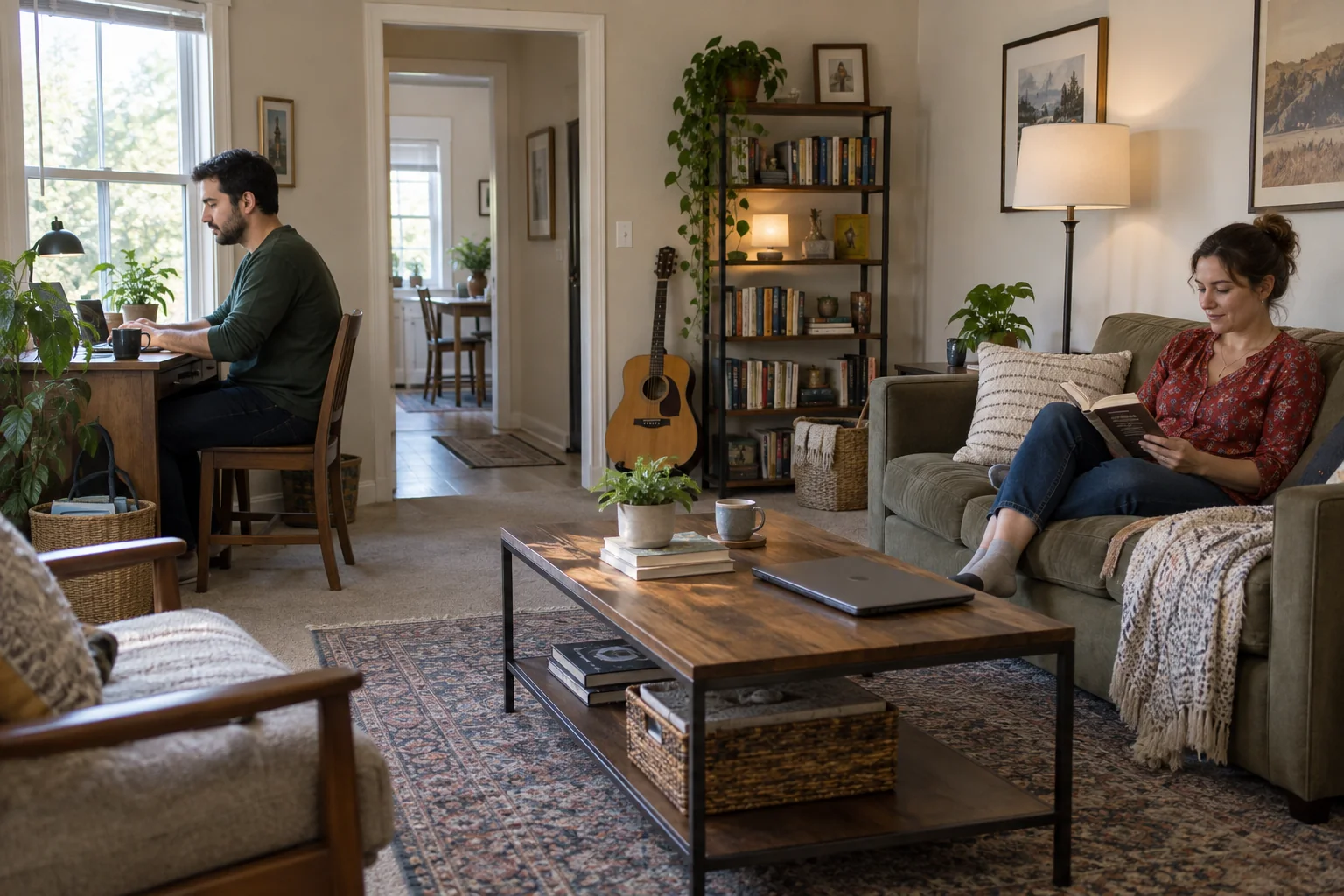
A desk fits in the living room. So does the sofa. The difficulty begins when one person is on a work call and the other wants to watch a show, fold laundry, or simply exist without appearing in the background. Fitting the furniture was the easy part.
A shared room works better when its layout follows activities rather than labels. You do not necessarily need a permanent office zone, a relaxation zone, and three pieces of furniture to announce the boundary. You need to know which activities can comfortably overlap, where their equipment lives, and how the room changes when the day changes.
Draw the routes before the zones
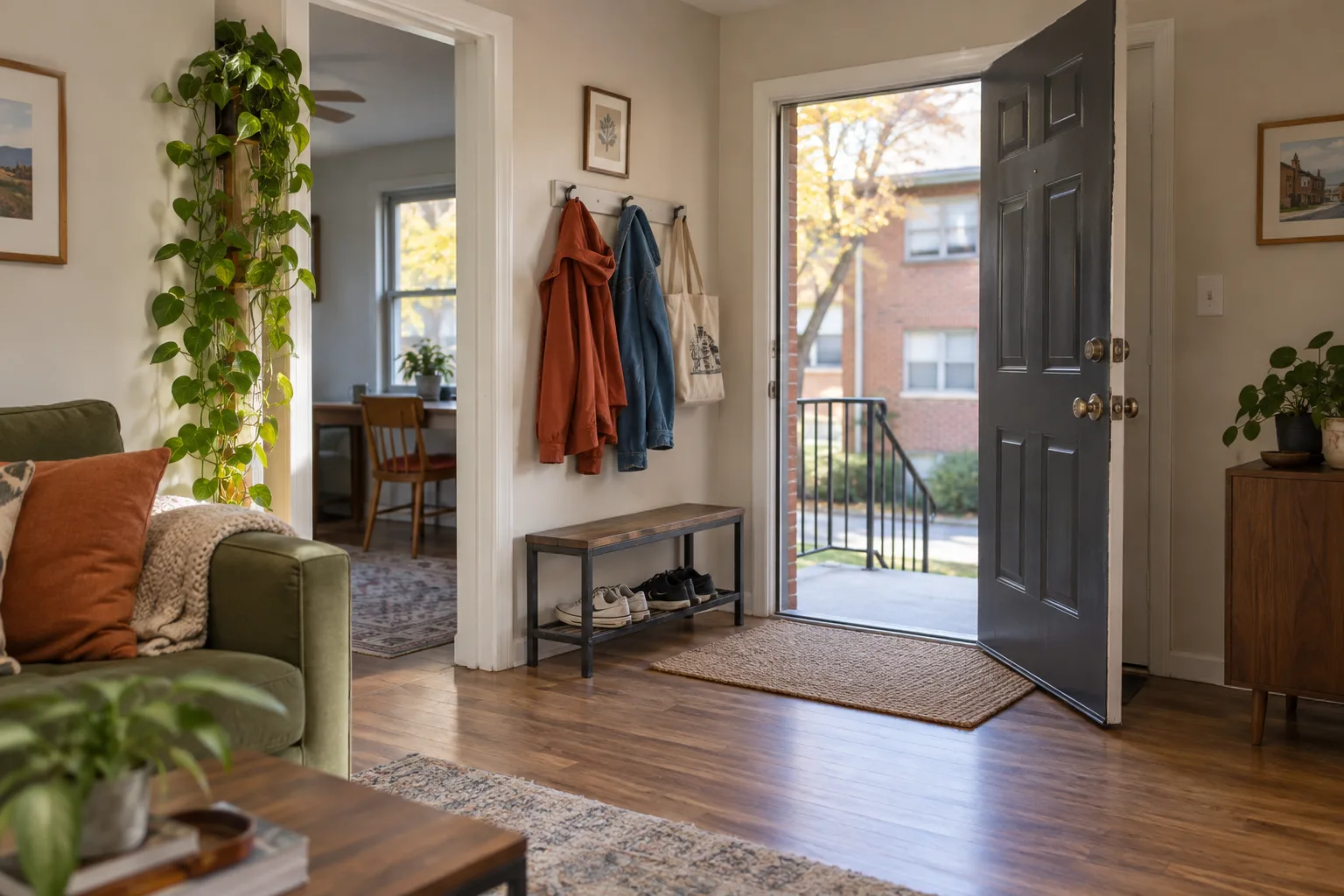
Start with the movements nobody can avoid: entering, reaching the window, opening a closet, getting to the kitchen. Those routes already claim space even when no furniture stands on them. A desk chair pulled backward occupies a different footprint from one tucked neatly under the desk. Plan for the person using it.
In a hypothetical narrow apartment, placing a desk behind the sofa looks efficient from above. In practice, the seated worker blocks the route to the balcony. Moving the desk to a side wall leaves less visual symmetry but allows another person to pass without asking for permission. That is a meaningful gain in a shared home.
Try the arrangement with existing furniture before choosing replacements. Move a small table into the proposed position, sit down, and have somebody carry a laundry basket through the room. Open the doors fully. A layout that only works when everyone turns sideways is borrowing space from your future patience.
The window matters beyond the view. If the desk claims its entire width, somebody else may lose their usual reading spot or access to the curtains. Assigning the best corner permanently to paid work is a household decision, not a neutral consequence of owning a laptop.
Some activities share space better than others
Reading and quiet computer work may sit comfortably together. A video meeting and a television do not become compatible because a shelf stands between them. Think about sound, movement, and privacy separately. A visual boundary can reduce distraction without providing acoustic separation.
This distinction prevents an expensive mistake. Buying a tall divider to solve a noise problem can leave you with the same noise and less daylight. Before shopping, describe the actual interruption: hearing speech, seeing somebody walk past, exposing personal material on screen, or needing a clear surface for a project.
For visual distraction, turning the desk toward a quieter wall may be enough. For confidential calls, another room or an agreed private period may be necessary. For a hobby spread across the table, a portable work surface can help only if there is somewhere safe to put the unfinished work afterward.
Some combinations simply need different times. A shared room is not failing because two incompatible activities cannot occur there simultaneously. The useful question is whether the timetable distributes that limitation fairly. One person should not acquire the whole living room every evening merely by having the louder activity.
Give the room a small, repeatable changeover
Imagine two people sharing a one-bedroom apartment. One works at the living-room table three days a week. The other uses it for sewing on weekends. Rather than creating two permanent stations, they agree on one clear table, separate storage, and a specific place for unfinished work.
The work equipment goes into a reachable cabinet at the end of the day. The sewing supplies occupy a sturdy container that can be brought to the table without unpacking half a closet. Neither person has to ask the other to remove a collection of loose items before starting. The room changes through a few movements, not a full reset.
That last point matters. A folding desk is not automatically practical if using it requires moving four chairs and disconnecting a monitor every morning. Count the actions. If the setup feels burdensome on a quiet Sunday, it is unlikely to become delightful before an early meeting.
Keep the most frequent activity easiest to start, but do not confuse frequency with entitlement. A daily workspace can have convenient storage while still disappearing from the dining surface at dinner. The agreement is about use and recovery, not whose belongings deserve to remain visible.
Storage belongs to the activity
Put supplies close to where they are used and give each person an identifiable place. This does not require matching baskets. A drawer that holds one person’s charging cable and notebook can be more useful than a shared decorative box nobody wants to sort.
Separate active materials from archives. The papers needed this week should not compete with old manuals for the easiest drawer. Likewise, a current knitting project needs different access from spare yarn. Making everything equally accessible usually means the room has too many things within reach and nowhere to set down a cup.
If you consider a freestanding bookcase as a divider, check how it is designed to be used and secured. The CPSC’s furniture tip-over guidance emphasizes following manufacturers’ anchoring instructions. Do not move furniture intended to be secured to a wall into the middle of a room and assume its new role makes it stable.
A lower object or a change in orientation may create enough separation without a tall barrier. You can also leave the division entirely invisible. Two people who know where their things go do not need a shelving unit to certify that there are two activities in the room.
Make the evening visibly different
Work can remain present even when the laptop is closed: a chair faces the room like an empty workstation, paperwork covers the table, and the brightest lamp points at the keyboard. Closing the cabinet and changing the light can make the evening feel less like sitting beside unfinished work.
Turn the chair back under the desk, clear the main surface, and change the lighting to suit what happens next. Our guide to lighting a rental with lamps explains how separate controls can support different uses of the same room. You may need a lamp beside the sofa more than another piece of storage.
Keep any end-of-day routine proportionate. Someone finishing a late shift may not want to stage the room before sitting down. Choose the two or three actions that make the biggest difference, and make the furniture support them. A clear table and a closed cabinet might be enough.
Notice who keeps adapting
After a normal week, ask which person moved most often, wore headphones most often, or gave up an activity. A layout can look fair while repeatedly assigning the inconvenience to the same person. Changing the schedule may do more than moving another chair.
Sometimes the answer is that a permanent desk is worth keeping and a different activity needs another setting. Sometimes both people want the living room back and work needs a smaller footprint. Either choice can be reasonable if it reflects an actual conversation. The room should carry your arrangements, rather than quietly making them for you.