A secondhand dresser can be inexpensive and still be the wrong purchase. It may block the bedroom door, need hardware that is no longer available, or cost more to collect than a less interesting piece nearby. The useful question is not whether the listing looks like a bargain. It is whether this particular object can make the journey into your home and do the job you need there.
Buying used furniture in the United States can mean a neighborhood yard sale, a reuse store, an estate sale, or a marketplace pickup from somebody’s third-floor apartment. Those are very different shopping arrangements. A store may offer delivery; a private seller may expect the room cleared that afternoon. Choose the object and the collection plan together, before enthusiasm has you promising to arrive with a vehicle that cannot carry it.
Measure the place where it will be used
Start with the furniture you are replacing, or the empty area that prompted the search. Record the maximum useful width and depth, then test what happens around that rectangle. A dining chair needs somewhere to move when somebody sits down. A drawer needs room to open. The entry to the room still has to work when the furniture is in everyday use rather than closed up for a photograph.
For an illustrative apartment, imagine a bedroom with space for a dresser along one wall but only a narrow passage beside the bed. A deep chest may fit the wall perfectly and make getting dressed awkward every morning. A shallower piece with less capacity could be the better purchase. The missing storage might be handled by reorganizing an existing closet; it does not automatically justify putting a larger obstacle in the room.
Bring a tape measure to the viewing. Ask for actual dimensions beforehand, including any projecting handles or top. Words such as compact and apartment-size are not measurements. If a piece has removable legs, establish whether they really detach and whether the necessary hardware is present. Do not assume that an object assembled inside a room will leave it in one piece.
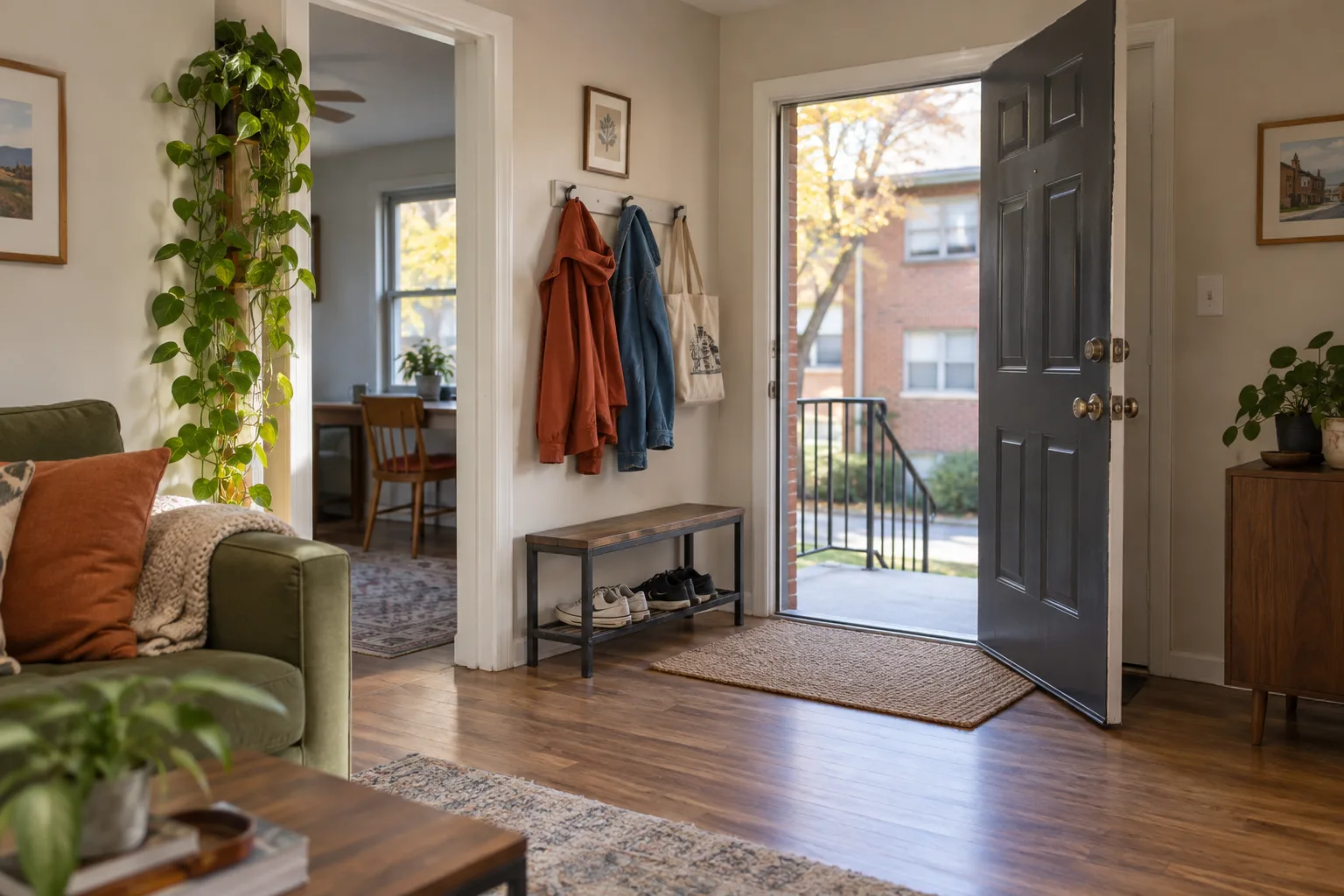
The delivery route deserves its own measurements: doorway openings, stair turns, elevator dimensions, and any building access restrictions. In a U.S. apartment complex, the closest parking space may be separated from your door by several buildings and outdoor stairs. In a row house, the decisive obstacle may be the turn just inside the entrance. A floor plan is only half the journey.
Inspect the structure before the finish
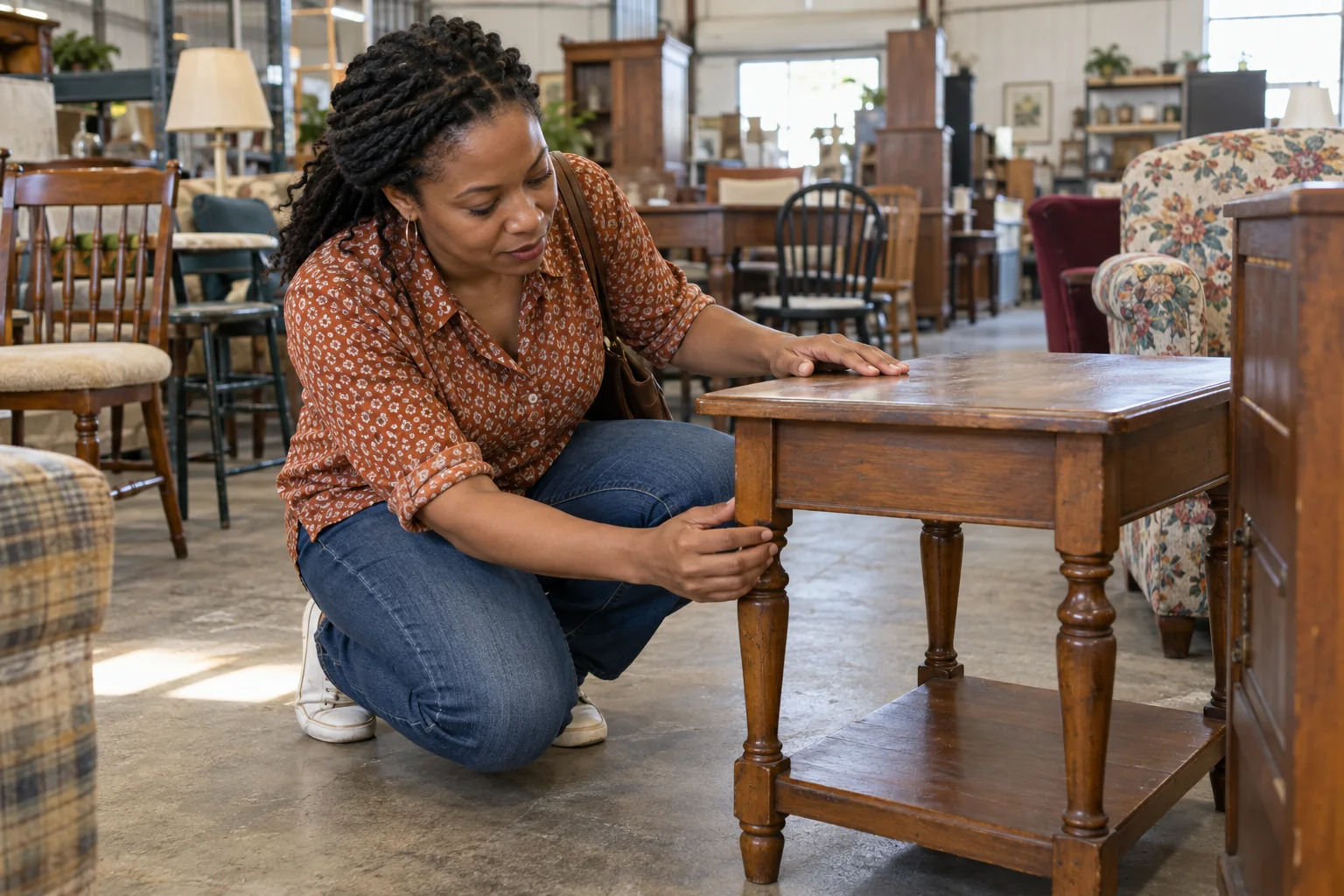
Scratches and instability are different problems. A worn tabletop may be perfectly useful if you like it as it is. A chair that shifts at its joints is asking for an assessment you may not be equipped to make. Gently test doors and drawers with the seller’s permission, look underneath, and inspect the back. Avoid loading or climbing on furniture to prove that it is strong.
Look for a manufacturer’s label, model number, and any instructions the seller still has. The Consumer Product Safety Commission’s resale guidance emphasizes checking used products for recalls and safety problems. Search the identifiable product, not merely the brand. If it is recalled, follow the official recall remedy rather than accepting a seller’s improvised repair as evidence that the issue is resolved.
Storage furniture needs particular care. The CPSC’s Anchor It campaign explains furniture tip-over prevention. Establish how the piece is intended to be secured, whether the correct parts are available, and how anchoring can be completed in your home. Renters should resolve the installation with management before buying. Keeping the heavy things in a lower drawer does not replace the manufacturer’s installation requirements.
Upholstered furniture introduces questions that a listing photo cannot answer. Inspect seams, undersides, cushions, and odors in person, and consider whether you can clean the item appropriately. If there are signs of pests, water damage, or contamination, leave it. This is not an occasion to convince yourself that a can of spray will solve an unidentified problem. A low price does not make you responsible for rescuing the object.
There is also a useful distinction between buying a project and buying furniture. If you need a table for dinner tonight, a refinishing job is not meeting that need. If you want a project, price the materials, workspace, time, and competent help it actually requires. An unfinished project can occupy the same scarce floor space as the furniture you were trying to replace.
The pickup can change the price
Compare the delivered cost, even when delivery means your own labor. In a hypothetical purchase, a table listed for $70 needs a $65 vehicle rental and $25 in fuel and supplies. That makes the cash cost $160 before any extra rental charges or paid help. A $140 table with a clearly defined $20 delivery could cost the same while requiring much less coordination. These are invented figures, not current local rates.
Ask what delivery includes. Curbside delivery, delivery to a building lobby, and placement inside your room are different services. Get the agreed destination, access conditions, and timing recorded. If stairs or a long carry change the price, it is better to learn that while comparing options than while the table is sitting on the sidewalk.
For a private pickup, settle the collection details before payment: who is moving the item, whether it will be disassembled, and which pieces and hardware are included. Arrange appropriate help or a professional mover for heavy or awkward objects. A seller’s statement that two people carried it in does not establish that your two people can safely carry it out.
Protect the purchase without making the transport unsafe. Follow the vehicle and equipment instructions, keep the load secured, and use a suitable vehicle. If the only available plan involves balancing furniture beyond a vehicle’s capacity, postpone the collection. The bargain will not become more useful by arriving damaged or causing an injury.
Give it a place before it arrives
Clear the destination rather than merely opening the front door. Decide where the old item will go, and check your building or local collection arrangements if it is leaving. Do not assume that furniture placed beside an apartment dumpster will be accepted. A replacement purchase can otherwise produce two unusable rooms: one occupied by the new piece, another storing the old one indefinitely.
Keep the identifying information, recall check, agreed terms, and any assembly instructions together. Photograph the item’s condition before transport, especially when somebody else is delivering it. That gives you a record of what was bought and makes later questions easier to discuss without relying on two different memories of the same scratch.
A good used piece does not have to look newly manufactured. It has to suit its intended use, be safe to install and use, and fit the route as well as the room. Once those conditions are met, a worn edge or an unfashionable handle can remain an ordinary detail. You can put your books away without first turning the dresser into a weekend occupation.