A farmers market can be a good place to buy a few ingredients and a poor place to improvise an entire week of meals. The strawberries are appealing. So are the bread, the flowers, and a bag of vegetables you have never cooked. By the time you leave, the grocery money may have been spent without providing anything for Monday’s dinner.
That does not make the market a bad idea. It means the trip needs a purpose. In a U.S. town where the market opens only on Saturday morning, it might supply seasonal produce while the supermarket handles staples. Or it might be a pleasant outing with one planned purchase. Those are both reasonable visits, and they need different budgets.
Find the market that fits the trip
The USDA’s Local Food Directories include a farmers-market directory. Use it to identify possibilities, then check the market’s own current announcement for dates, location, hours, and any seasonal changes. A listing helps you find a market; it does not guarantee that every stall will be present this weekend.
Look at the journey as well as the opening time. A market on a familiar bus route may be easier to use than a larger one requiring paid parking and a long walk with bags. If you drive, find the parking arrangement before arriving. If you walk, estimate what you can comfortably carry home.
Decide whether you need a quick food shop or time to browse. A person with an appointment afterward may prefer a small market where familiar vendors are easy to find. Somebody seeking a leisurely morning may welcome the larger event. The same place can support both, but not necessarily on the same schedule.
Take a meal idea rather than a rigid recipe
Look at what is already in the refrigerator and choose one or two meals that could use fresh produce. A meal idea such as roasted vegetables with beans allows several suitable purchases. A precise recipe requiring an unusual ingredient can make the market frustrating if that ingredient is not available.
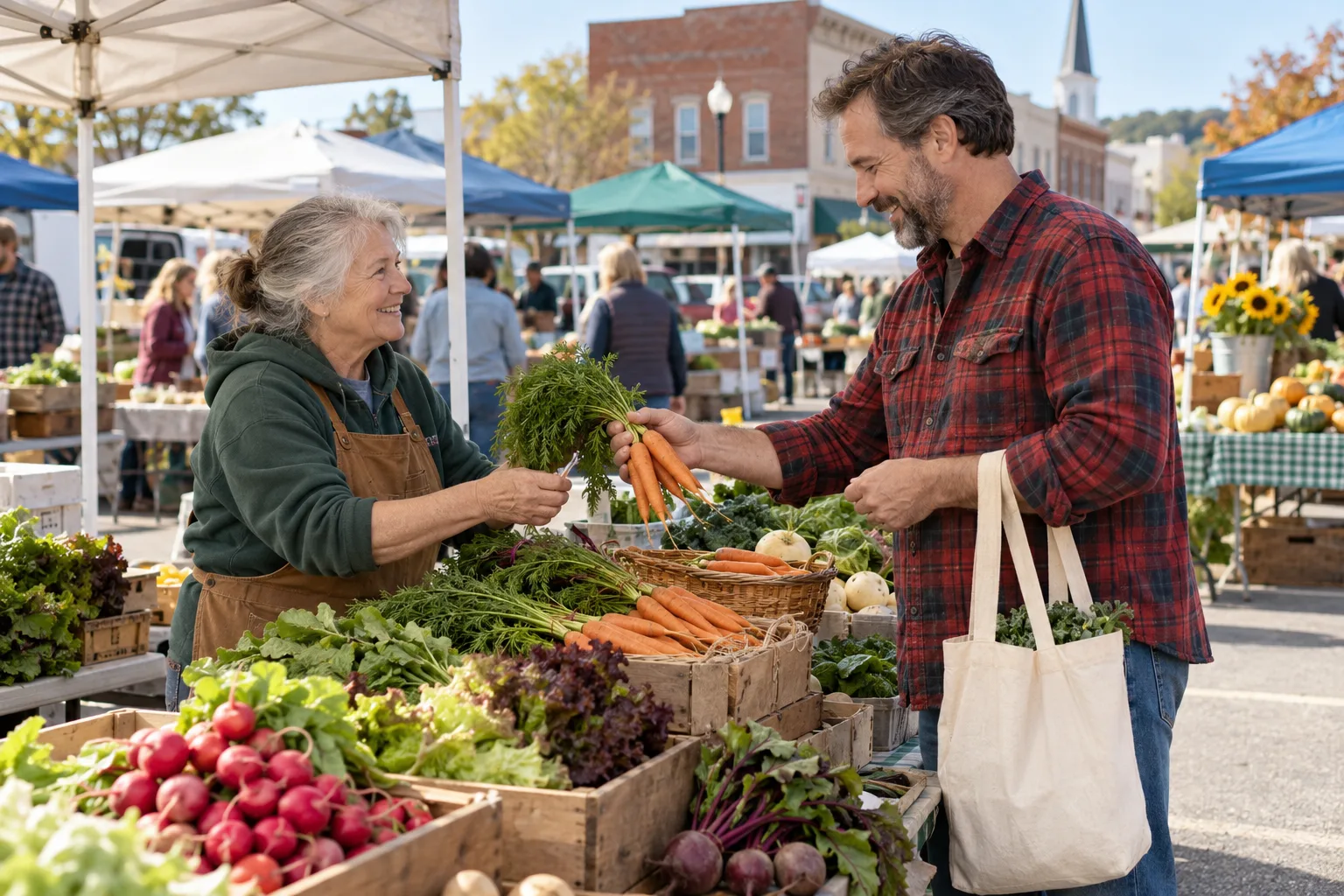
Ask the vendor how an unfamiliar product is normally used and how to store it. A short answer about cooking or keeping quality can help you judge whether it belongs in this week’s meals. There is no obligation to buy something merely because a conversation has started. Vendors also need the line to move.
Choose quantities by likely use. A generous bundle is not necessarily a bargain for one person with three dinners away from home. If a vendor sells by a fixed basket, decide whether the amount suits you before paying. Sharing with a friend can be practical when the division and payment are agreed, rather than assumed after the purchase.
Compare the unit you will actually receive
Prices may be displayed per pound, bunch, basket, or individual item. Make sure the comparison refers to the same quantity and product. A supermarket price remembered from last month may not be a useful benchmark for a differently sized package today.
There is no rule that farmers markets are always cheaper or always more expensive. Compare the item in front of you with an alternative you would genuinely buy. Variety, ripeness, and suitability for immediate cooking may matter alongside price. Explain those priorities to yourself without turning every choice into a moral judgment about where food should come from.
Set aside separate amounts for groceries and optional treats if that helps. In a hypothetical visit, a $25 produce budget and a $10 outing budget make room for both vegetables and coffee without confusing them. These invented amounts illustrate a division, not an expected cost at any market. A smaller or larger budget can follow the same method.
Ask about accepted payment before selecting a large order. Card acceptance, cash arrangements, and benefit programs vary. For SNAP, USDA’s farmers-market information identifies participating-market arrangements. Confirm the process at the specific market and which vendors and purchases are eligible. Do not assume every stall uses the same payment system or that an incentive operates everywhere.
Let the outing have its own limits
Food shopping and social time can overlap, but one person’s quick errand may be another’s weekend activity. If you go together, decide what each person expects. Agreeing on a meeting point and departure time can leave room for different browsing speeds without somebody standing impatiently beside the tomatoes.
For a household with children or an older relative, consider seating, toilets, shade, and walking distance. These details determine whether the visit is comfortable. They are not a reason to turn the outing into a complicated event plan; they are the difference between staying willingly and needing to leave immediately.
A market does not have to become your weekly routine to be useful. A monthly visit for a favorite ingredient may fit better than forcing a Saturday habit around every other commitment. Buying all groceries there is not the test of whether you support local producers.
Finish the shopping by getting it home
Bring bags suited to the purchases and avoid crushing soft produce under heavier items. If buying foods that need refrigeration, plan to keep them cold and return them to appropriate storage promptly. The FDA’s storage guidance gives a two-hour limit for foods requiring refrigeration at room temperature, reduced to one hour above 90°F. Those limits include the time spent on the outing, not just the drive home.
Do not buy a refrigerated item at the beginning of a long uncooled visit and count only the final journey. A cooler with appropriate cold sources can help, but the food still needs safe handling. If the day includes several unrelated errands, choose purchases that suit the trip or change the order of the errands.
At home, put food away according to its needs and assign the most perishable purchases to the earliest meals. Leaving everything in an attractive shopping bag on the floor does not finish the task. The market purchase earns its place when it becomes food you eat.
After a few visits, notice what you reliably use and what remains in the refrigerator. Keep the successful part of the outing and reduce the purchases that create work or waste. A market can remain a place for discovery without requiring you to bring every interesting possibility home.