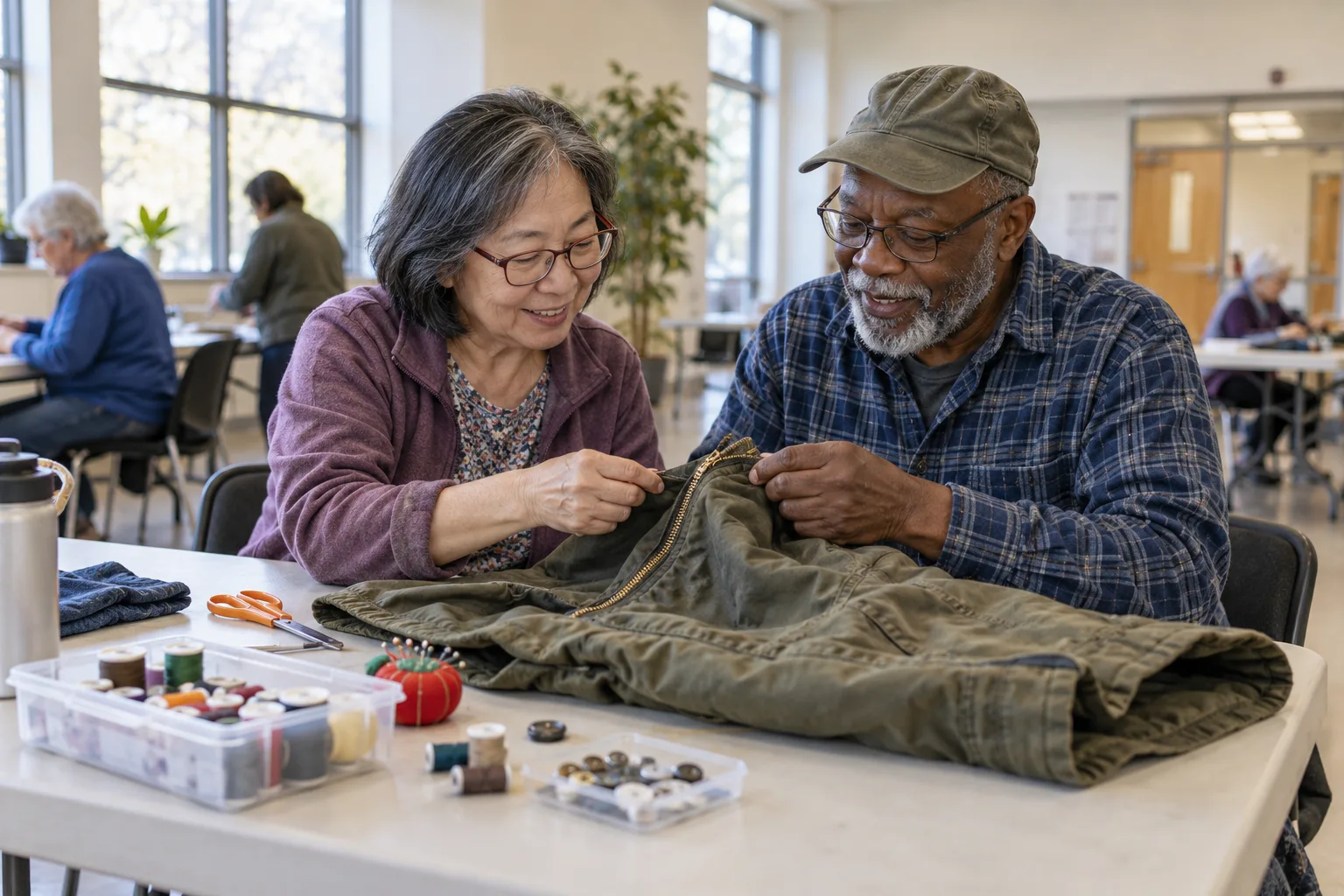
A jacket with a broken zipper can sit in a closet for months because throwing it away feels wasteful and repairing it feels unfamiliar. A community repair event offers a third possibility: take it somewhere that people may help you understand the problem. The visit works best when you arrive with one manageable item and realistic expectations.
American repair gatherings may be organized by a county, library, tool library, neighborhood group, or a Repair Café. They are not all the same service. Before traveling, establish what the particular event accepts, when it operates, and whether you need to register. The words “repair event” do not guarantee a specialist for every object.
Choose the item that makes the visit worthwhile
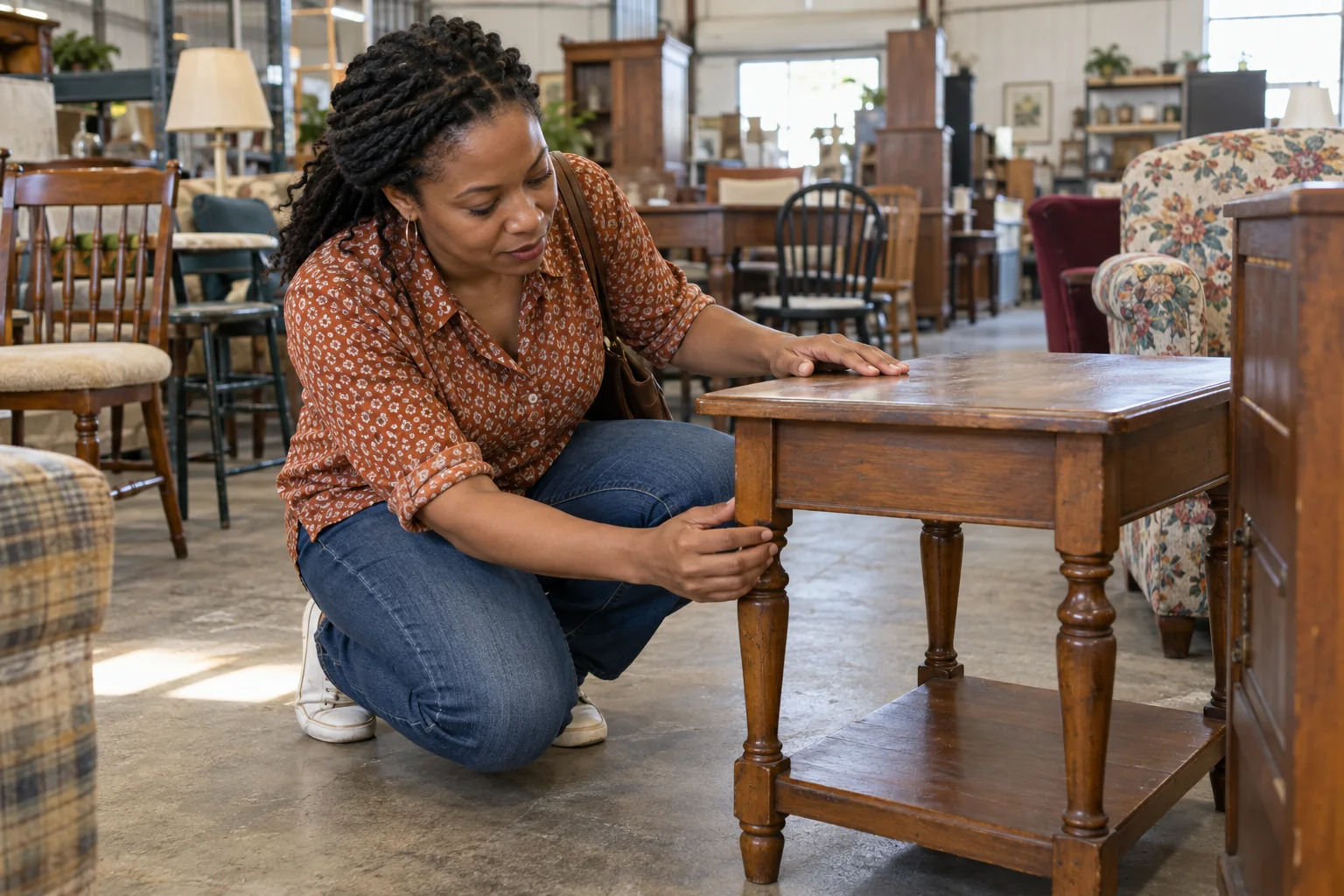
Start with something you still want to use. The fact that an object could possibly be repaired does not mean it has a place in your life. A lamp that fits your room, a useful jacket, or a small household item may justify the trip more readily than a broken appliance you disliked even when it worked.
Describe the problem without diagnosing it. A zipper that separates, a lamp that does not turn on, or a loose chair joint gives a volunteer a useful starting point. “It needs a new motor” may send the conversation in the wrong direction if that is only a guess. Note when the issue began and any relevant change you observed.
Take one item first if the event encourages that. It gives you time to learn how the gathering works and prevents the visit becoming a struggle to transport a pile of uncertain repairs. An item you can safely carry and wait beside is a sensible first choice.
Some items deserve professional attention rather than a community experiment. Ask the organizer about anything involving hazards, specialized equipment, or critical safety functions. Do not interpret an event’s general enthusiasm for repair as approval to bring every electrical, gas-powered, or medical device in the house.
Read the local rules as part of the invitation
As a specific U.S. example, King County, Washington’s repair program describes portable household items and clothing it may accept, along with exclusions and cleanliness requirements. It also explains how its first-item system works. Those conditions belong to that program; a gathering in another county may operate differently.
The Repair Café Foundation’s visitor FAQ describes its gatherings as places for people to work on repairs together, rather than a drop-off repair business. It advises contacting local organizers when you need to know whether a particular specialist will be available. Use the directory as a way to find a group, then verify the event itself.
Check the date carefully. A room listed as a regular venue may host the gathering only on specific days. In King County’s published September 2026 update, the county-sponsored season has ended, while separate local organizations have their own arrangements. That illustrates why an address alone is not evidence that help will be waiting there tomorrow.
Ask about registration, item limits, accessibility, and any parts you are expected to provide. If the organizer cannot promise a successful repair, take that seriously. The promise may be an attempt and an explanation, not a restored appliance by closing time.
Bring the missing context
Clean the item as appropriate before the visit. Empty pockets or compartments, remove unrelated contents, and bring the components needed to understand the issue. A detached button, original power adapter, or user manual may be useful. Follow the organizer’s instructions about batteries or accessories rather than assuming every part should be transported together.
If the object contains personal information, make arrangements before bringing it. Do not hand over an unlocked device with private accounts merely because the event is friendly. Many gatherings exclude phones or computers altogether; others have defined limits. Clarifying the scope protects your information and avoids asking a volunteer to take responsibility they did not accept.
Avoid buying speculative replacement parts first. A part that looks similar may not fit, and the repairer may identify a different fault. If a purchase is needed after assessment, record the exact specification and whether a follow-up visit is possible. The first visit can be useful even when the actual repair requires another step.
Stay with the repair if that is the format
Plan enough time to wait and participate. If the gathering expects you to remain with your item, it cannot also serve as a convenient drop-off while you run errands. Ask how the queue works and what happens if the event ends before your turn.
You do not need to arrive knowing how to repair the item. You do need to be willing to explain the problem and follow the organizer’s boundaries. A volunteer may demonstrate a basic process, explain why a fault is difficult, or recommend a professional. All three outcomes can clarify the decision.
Do not push for a repair somebody considers unsafe or beyond the event’s scope. A refusal can be useful information about the limits of the equipment, the object, or the available expertise. It is not an invitation to ask another volunteer until somebody agrees.
Consider the household expectations too. If a borrowed item or shared appliance is involved, agree with the owner before making changes. A repair attempt can alter the object or reveal a problem that prevents further use. Consent about the item matters even when the event does not charge for its time.
Decide what to do after the attempt
If the repair succeeds, ask how to use and maintain the item and whether any further work remains. Do not assume an improvised adjustment is a permanent repair unless that is what the repairer explains. Retain any instructions relevant to the next use.
If the item needs a purchased part or professional service, compare that next step with its value to you. A jacket with a good fit may deserve more repair effort than an unwanted piece of furniture. This is a decision about use, expense, and time, not a competition to prove you never replace anything.
If it cannot be repaired, use the appropriate local disposal or recycling route. The event may be able to point you toward information, but it is not necessarily a collection service. Bring the item home unless the organizer explicitly accepts it.
For a regular participant, the social side may become part of the attraction: returning to a familiar gathering and learning what repair involves. That can happen gradually. The first visit only needs one clear purpose and one object. You leave with either something usable or a better explanation of what stands between the broken item and its next life.