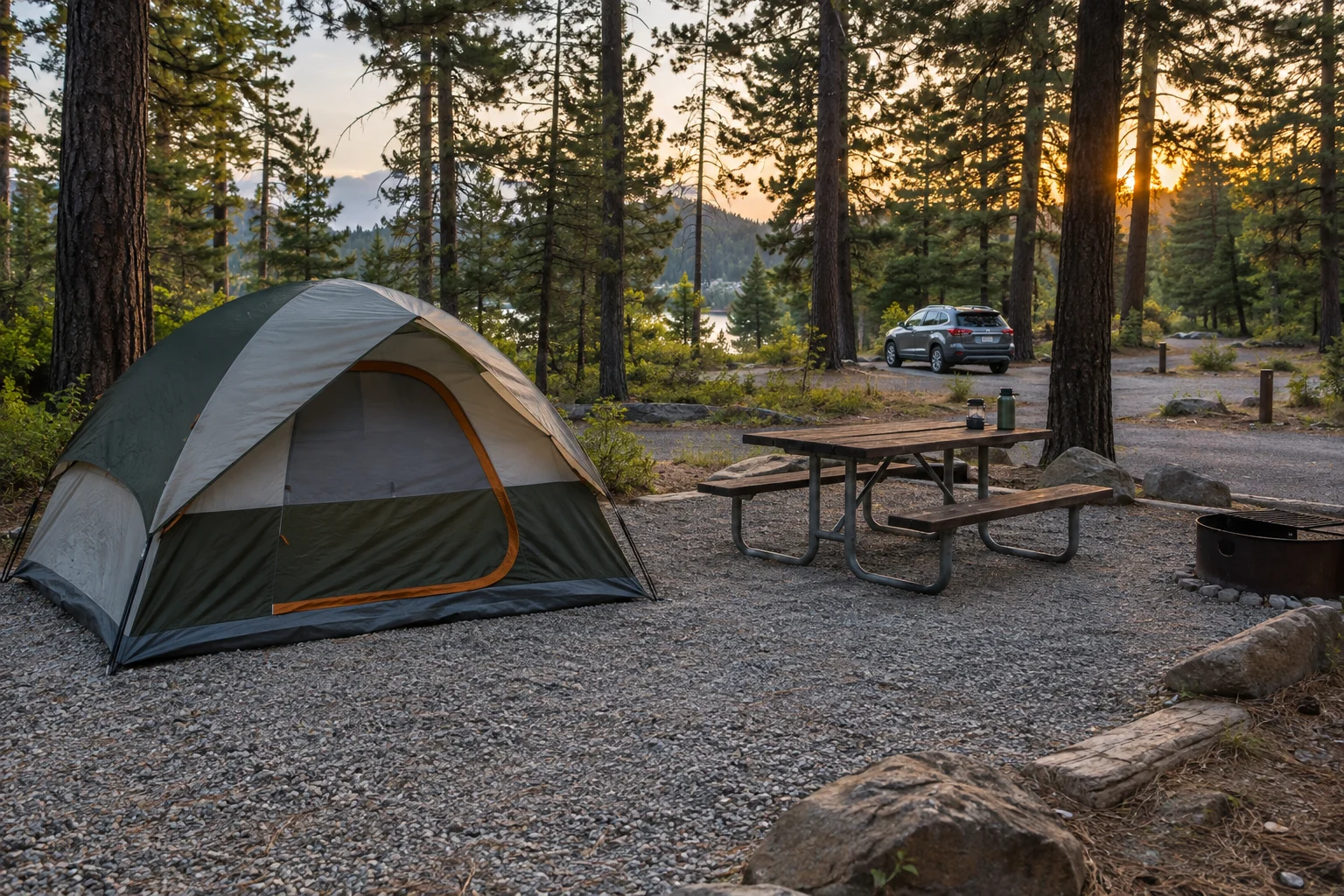
The photograph shows trees, a picnic table, and an appealing patch of open ground. It does not necessarily show the walk from the parking space, the slope under the tent, or how far you will travel for water. A campsite is a small piece of infrastructure, not just a view. The right first booking is one whose practical details match the equipment and experience you are bringing.
Start with the kind of camping you want to do. A tent beside your car, a walk-in site, an RV space, and a backcountry permit can involve very different preparation. Do not choose from a scenic image before identifying which arrangement the listing describes. A quieter or more remote option is not automatically a better introduction if it adds tasks you have never tried.
Read the site type carefully
Check the permitted equipment, vehicle limits, number of people, and any dimensions relevant to your setup. A site may have a parking spur but a separate tent area, or it may be designed for equipment you do not have. Read the individual site details as well as the campground overview. The rules for one numbered space may not describe every other space nearby.
Recreation.gov provides reservations for many federal recreation locations, but not every U.S. campground uses it. Follow the managing agency's official link and confirm that you are booking the intended place. Similar names, nearby facilities, and different land managers can make a search result look more interchangeable than it is.
If a key detail is missing, contact the listed operator before paying. Ask a concrete question about the equipment or access you need. “Will this work for camping?” is less useful than “Is the tent area reached by steps, and how far is it from the parking space?” Your first reservation should reduce uncertainty, not conceal it under a favorable star rating.
Treat facilities as part of the booking
Check drinking-water availability, restrooms, waste disposal, and any other facilities you need. Identify seasonal limits and current notices. Do not assume that a symbol on a general map guarantees the facility will be operating on your dates. A campground that suits an experienced visitor carrying more supplies may not suit your intended weekend.
Think through ordinary moments: washing hands, preparing food, using the restroom at night, and getting dry after rain. For access needs, verify the route and facilities rather than relying only on a broad accessibility label. If someone in the group requires a particular arrangement, make that a selection criterion before comparing views.
A hypothetical pair of campers might prefer a less dramatic site near facilities for their first trip, even if the setting is busier. Another group with familiar equipment may accept a longer walk for more space. Neither choice is more authentic. The useful question is whether the site supports the trip you are prepared to take.
Understand the reservation's boundaries
Read arrival and departure times, the reservation holder's responsibilities, and rules for changes or cancellations. Recreation.gov states that location-specific policies take precedence over its general reservation policies. That makes the individual facility page essential reading rather than an optional detail after checkout.
Check what the payment includes and what must be arranged separately. Save the confirmation and any instructions you will need without a reliable connection. If the group is sharing costs, agree on how cancellation charges or changed plans will be handled before one person puts the entire booking on a card. Small trips can still produce avoidable money disagreements.
If your preferred dates are unavailable, compare alternatives honestly. A different season may change weather, daylight, facilities, and road access. A farther campground may require arriving after dark. Availability alone does not make an alternative suitable; it simply means you have another option to assess.
Plan an arrival you can manage
Work backward from the time you want the tent and sleeping setup ready. Include the drive, stops, finding the entrance, and any check-in process. For a first trip, leave enough daylight to learn how the site works. You do not need to test unfamiliar equipment for the first time while tired, hungry, and trying to find small parts in the dark.
Practice setting up the tent before leaving, using the manufacturer's instructions. Check that the necessary pieces are present and that your sleeping arrangements fit. Pack the items needed on arrival where you can reach them without unloading everything onto wet ground. A modest amount of preparation at home can remove a large amount of irritation at the campsite.
Keep the first meal simple and compatible with the facilities and current rules. Check fire restrictions and food-storage instructions from the managing agency. Do not assume that a fire ring means a fire is permitted, or that storing food beside the tent is acceptable. Follow the specific requirements for the location rather than advice that happens to describe a different region.
Make the first night an experiment you can end
Choose a trip length and distance that leave room to learn. One or two nights near home may tell you whether the equipment, packing, and routine work for your group. A longer journey can make every small problem feel expensive because there is more pressure to continue. You can build complexity after you know what you enjoy.
Agree on what would cause you to change plans: unsafe conditions, equipment failure, or a household member who cannot manage the setup. Use current official information and avoid treating persistence as the measure of a successful trip. A reservation is permission to use a site under its conditions, not an obligation to stay regardless of what happens.
Afterward, separate essential fixes from things that were merely inconvenient. Perhaps you need a better way to keep bedding dry, clearer storage labels, or a site with easier access. You may not need a larger vehicle, a complicated kitchen, or every accessory in the camping aisle. The next booking should reflect what you learned about your own trip. The best campsite is not the one with the most impressive photograph; it is the one where the ordinary parts of the day work well enough for you to enjoy being outside.